Common Causes of Infertility in Men and Women: Complete Guide
1 hour ago, 8 minutes read
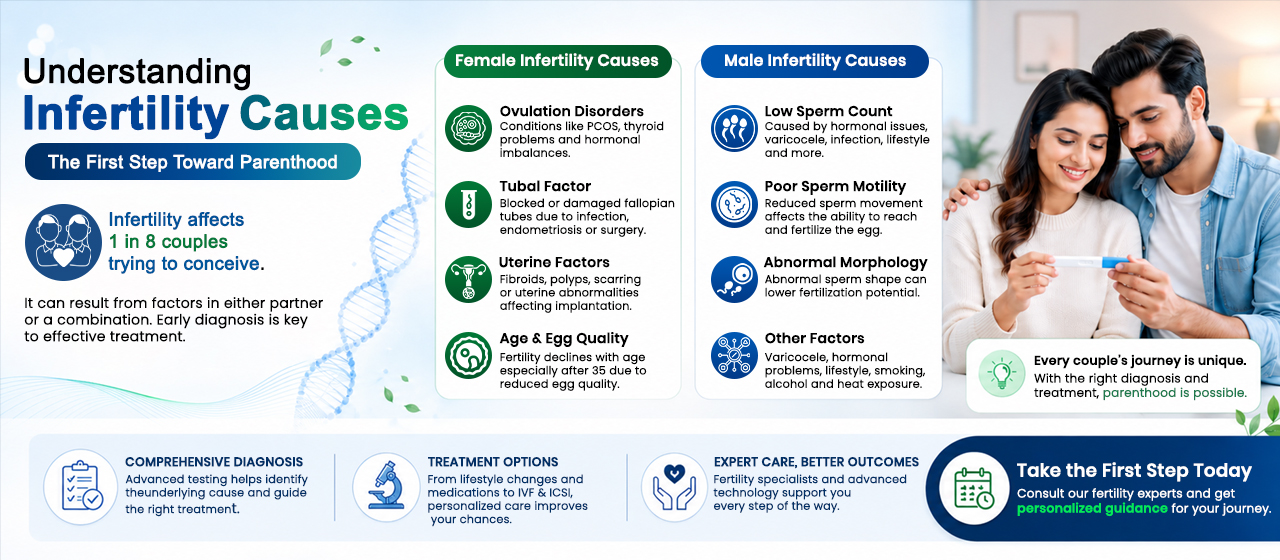
Infertility affects approximately 1 in 8 couples trying to conceive. Understanding the causes of infertility in both men and women is the first step toward finding appropriate treatment. Infertility can result from problems in either partner or a combination of factors. This comprehensive guide explores the most common causes of infertility in men and women.
Ovulation disorders are the most common cause of female infertility, accounting for approximately 25 percent of cases. PCOS (Polycystic Ovary Syndrome) is the leading cause of anovulation (lack of ovulation). PCOS affects 1 in 10 women and causes hormonal imbalances that prevent regular ovulation. Other ovulation disorders include thyroid problems, elevated prolactin levels, and primary ovarian insufficiency (POI). Ovulation disorders are often treatable with medications like clomiphene or letrozole to stimulate ovulation.
Blocked or damaged fallopian tubes prevent sperm from reaching eggs. Causes include previous pelvic infections, endometriosis, pelvic adhesions, or previous pelvic surgery. Tubal scarring from sexually transmitted infections (STIs) like chlamydia is a common cause. Ectopic pregnancy history can also damage tubes. Tubal factor infertility is diagnosed through hysterosalpingography (HSG) or laparoscopy. Treatment options include surgical repair or IVF.
Endometriosis affects 10-15 percent of women of reproductive age. Endometrial tissue grows outside the uterus, causing inflammation, pain, and infertility. Endometriosis reduces fertility by damaging eggs, reducing ovulation, and impairing implantation. Diagnosis requires laparoscopy. Treatment includes medications, surgery, or IVF.
Problems with the uterus affect implantation and pregnancy. Uterine fibroids (benign tumors) distort the uterine cavity. Uterine polyps interfere with implantation. Uterine scarring from dilation and curettage (D&C) reduces endometrial receptivity. Uterine abnormalities (septate uterus, unicornuate uterus) affect conception and pregnancy. Diagnosis uses ultrasound or hysteroscopy. Treatment depends on the specific problem.
Diminished ovarian reserve (DOR) means fewer eggs remain in the ovaries. Age is the primary cause; ovarian reserve naturally declines with age. Other causes include previous ovarian surgery, chemotherapy, radiation, genetic factors, and autoimmune conditions. DOR is diagnosed through AMH testing and follicle counts. Pregnancy is still possible with DOR through IVF or other fertility treatments.
Female age is the most significant factor affecting fertility. Egg quality declines with age, particularly after age 35. Chromosomal abnormalities increase with age, resulting in miscarriage and reduced IVF success. Women over 35 have lower success rates with natural conception and assisted reproductive technology. Advanced maternal age is associated with increased pregnancy complications.
Low sperm count is the most common male infertility cause. Normal sperm concentration is at least 16 million per milliliter. Causes include varicocele (enlarged testicular veins), hormonal problems (low testosterone), testicular infection, previous chemotherapy or radiation, smoking, alcohol use, and obesity. Low sperm count reduces natural conception probability but does not prevent pregnancy through IVF with ICSI.
Motility refers to sperm movement. Normal motility is at least 40 percent progressive forward movement. Poor motility reduces natural conception probability even with normal sperm count. Causes include infection, hormonal problems, genetic factors, smoking, alcohol, and heat exposure. ICSI bypasses motility problems by directly injecting sperm into eggs.
Morphology refers to sperm shape. Normal morphology is at least 4 percent of sperm. Abnormal morphology reduces fertilization probability. Causes include infection, hormonal problems, genetic factors, and lifestyle issues. ICSI overcomes morphology problems by selecting viable sperm for injection.
Azoospermia is the complete absence of sperm in ejaculate. Obstructive azoospermia results from blocked ducts (vasectomy, congenital absence of vas deferens). Non-obstructive azoospermia results from testicular failure. Obstructive cases may be surgically correctable. Non-obstructive cases may require testicular sperm extraction for IVF with ICSI.
Varicocele is enlargement of veins in the scrotum, affecting approximately 15 percent of men. Varicocele reduces sperm production and quality through heat and hormonal effects. Varicocele repair through surgery or embolization improves sperm parameters in approximately 50 percent of men. Treatment may restore natural fertility or improve sperm quality for IVF.
Hormonal imbalances affect sperm production. Low testosterone reduces sperm production. Elevated FSH indicates primary testicular failure. Elevated prolactin suppresses testosterone. Thyroid problems affect fertility. Hormonal problems are diagnosed through blood tests and treated with hormone replacement or medications to stimulate hormone production.
Some couples develop antibodies against sperm or embryos that impair fertility. Anti-sperm antibodies in men or women reduce fertilization. Antiphospholipid antibodies increase miscarriage risk. Immunological testing identifies these conditions, and treatment includes immunosuppression or assisted reproductive technology.
Genetic abnormalities affect fertility in both men and women. Klinefelter syndrome (47, XXY) causes male infertility. Turner syndrome (45, X) causes female infertility. Cystic fibrosis mutations cause congenital absence of vas deferens. Chromosomal abnormalities increase miscarriage risk. Genetic counseling helps couples understand reproductive implications.
Approximately 10-15 percent of infertile couples have unexplained infertility despite normal diagnostic testing. Underlying problems may not be detected by current testing methods. IVF is often recommended for unexplained infertility, as it bypasses unknown barriers and allows assessment of fertilization and embryo development.
Our specialists can help identify the cause of your infertility and recommend appropriate treatment. Schedule your comprehensive fertility evaluation today.
A: Ovulation disorders are the most common cause of female infertility, accounting for approximately 25 percent of cases. PCOS is the leading ovulation disorder. Other common causes include tubal factor infertility, endometriosis, and age-related decline in egg quality.
A: Low sperm count (oligospermia) is the most common male infertility cause. Other common causes include poor sperm motility, abnormal morphology, varicocele, and hormonal problems. Many male infertility causes are treatable or manageable through IVF with ICSI.
A: Some causes of infertility can be treated to restore natural fertility. Ovulation disorders respond to medication. Tubal blockage can sometimes be surgically corrected. Varicocele repair may restore fertility. However, some causes cannot be cured but can be managed through fertility treatments like IVF.
A: Seek evaluation after 12 months of unprotected intercourse without conception. For women over 35, seek evaluation after 6 months. Seek earlier evaluation if you have known fertility risk factors like irregular periods, endometriosis, or PCOS.
A: No. Many couples have combined infertility factors affecting both partners. For example, a woman with PCOS and mild tubal scarring combined with male partner's low sperm count creates multiple barriers to conception. Comprehensive evaluation identifies all contributing factors.
National IVF provides complete fertility evaluation and diagnosis. Our specialists identify the cause of your infertility and recommend personalized treatment.
Free, no-obligation consultation | Board-certified specialists
News and Articles

Introduction: Hope Begins Here Infertility is an emotional and physical journey that affects thousands of couples in Ne...

When it comes to reproductive health and fertility care, choosing the right expert is the most crucial decision a couple...
Infertility affects countless couples worldwide, and Kathmandu is no exception. For those seeking a clear path to parent...

