What Can I Do to Improve My Fertility?
2 hours ago, 23 minutes read
When the journey to parenthood takes longer than expected, it is entirely natural to feel overwhelmed and ask, "What can I do to improve my fertility?" The internet is flooded with advice ranging from "miracle" diets to unproven supplements and rigid lifestyle rules. However, separating medical facts from common myths is crucial for your physical and emotional well-being.
Improving fertility is about taking actionable, evidence-based steps to support your reproductive system while understanding the biological limitations of natural conception. Whether you are just starting to plan a family or you have been trying for several months, the most effective approach combines sensible lifestyle adjustments, precise timing, and knowing exactly when to seek help from a reproductive specialist.
At National IVF, recognized as the Best IVF Center in Nepal, our philosophy under the guidance of Dr. Usha Karki is built on transparency and medical science. Fertility challenges can involve the female partner, the male partner, both, or no immediately identifiable cause at all. This comprehensive, 3,000-word guide is designed to empower you with the truth about natural conception, male and female fertility factors, preconception care, and advanced reproductive medicine.
Before exploring specific lifestyle changes, we must answer a fundamental question: How can I improve my fertility in a way that actually makes a difference?
Improving fertility means creating the optimal biological conditions required for conception while actively identifying medical barriers that lifestyle changes alone cannot solve.
For a natural pregnancy to occur, a complex series of biological events must happen flawlessly:
Ovulation: The female body must develop and release a healthy, mature egg from the ovary.
Sperm Quality and Delivery: The male body must produce an adequate number of healthy, motile (moving) sperm capable of traveling through the female reproductive tract.
Tubal Patency: At least one fallopian tube must be open and functional so the egg and sperm can meet for fertilization.
Implantation: The fertilized egg (embryo) must successfully travel down the fallopian tube and implant securely into a healthy uterine lining (endometrium).
You have direct control over certain fertility factors, such as quitting smoking, managing your weight, tracking your cycle, and optimizing your diet. However, you cannot "eat your way" out of structural or severe genetic issues.
No amount of green juice, yoga, or positive thinking can reopen blocked fallopian tubes, correct severe sperm-production failures (azoospermia), cure advanced endometriosis, or reverse age-related ovarian decline. This is why a realistic fertility plan always involves two steps: doing what you can naturally, and consulting the Best IVF Center in Nepal when those efforts reach their limit.
One of the most common reasons healthy couples fail to conceive is simply poor timing. If you are asking, "What can I do to improve my fertility immediately?" the answer is often to optimize when you have intercourse.
The human egg only survives for about 12 to 24 hours after it is released during ovulation. However, healthy sperm can survive inside the female reproductive tract for up to five days.
Because of this, the fertile window is defined as a six-day period: the five days leading up to ovulation, plus the day of ovulation itself. The highest probability of conception occurs when intercourse takes place one to two days before ovulation. This ensures that a healthy population of sperm is already waiting in the fallopian tubes when the egg is released.
There is a persistent myth that couples should "save up" sperm by abstaining from intercourse for a week before ovulation. This is medically incorrect. Long periods of abstinence can actually decrease sperm motility and increase the number of dead or abnormal sperm in the ejaculate.
The Evidence-Based Approach:
Optimal Efficiency: Having intercourse every one to two days during the fertile window yields the highest pregnancy rates.
The Sustainable Approach: Having intercourse two to three times per week throughout your entire cycle is nearly as effective and often much less stressful. It removes the anxiety of relying on ovulation tracking apps.
Calendar-based ovulation apps are useful for tracking period lengths, but they are notoriously inaccurate for predicting the exact day of ovulation. They rely on historical averages, but human bodies are not machines; stress, illness, and travel can shift ovulation by several days.
For better accuracy, consider using Ovulation Predictor Kits (OPKs), which detect the surge of Luteinizing Hormone (LH) in your urine, signaling that ovulation is likely to occur within 24 to 36 hours. Tracking cervical mucus—which becomes clear, slippery, and stretchy (like raw egg whites) near ovulation—is also a highly effective natural indicator.
Preconception care is vital. It prepares your body not just to get pregnant, but to sustain a healthy pregnancy. If you are asking, "How can I improve my fertility as a woman?" focus on these foundational steps.
Every woman capable of becoming pregnant should take a daily supplement of 400 micrograms of folic acid starting at least one to three months before conception.
Why it matters: Folic acid drastically reduces the risk of neural-tube defects (major birth defects of the baby's brain and spine).
The reality: Folic acid does not improve egg quality or cure infertility, but it is the most critical prenatal vitamin for fetal safety. Do not take mega-doses unless specifically prescribed by a doctor at the Best IVF Center in Nepal, as excessive intake is unnecessary.
Before trying to conceive, have a comprehensive consultation with a healthcare professional to review everything you take.
Certain prescription medications for high blood pressure, depression, or autoimmune diseases may be unsafe during early pregnancy.
Over-the-counter NSAIDs (like Ibuprofen) taken around the time of ovulation can sometimes interfere with the release of the egg.
Never stop a life-saving medication abruptly without consulting your doctor.
Your overall metabolic and endocrine health dictates your reproductive health. Unmanaged chronic conditions create a hostile environment for conception.
Thyroid Disorders: Both an underactive (hypothyroidism) and overactive (hyperthyroidism) thyroid can halt ovulation and increase the risk of miscarriage.
Diabetes: Uncontrolled blood sugar levels disrupt hormones and decrease implantation success.
PCOS (Polycystic Ovary Syndrome): The leading cause of anovulation (lack of ovulation). Managing insulin resistance through diet or medication (like Metformin) is crucial.
Body weight profoundly impacts female fertility because fat cells produce estrogen.
Underweight (BMI < 18.5): Too little body fat can cause the brain to stop sending the hormones necessary for ovulation (hypothalamic amenorrhea).
Overweight (BMI > 25): Excess body fat leads to an overproduction of estrogen and insulin resistance, confusing the body's ovulatory signals. Studies consistently show that if you are overweight and not ovulating, losing just 5% to 10% of your body weight can restart natural ovulation. However, avoid extreme crash diets, as severe caloric restriction signals to your body that it is in "starvation mode," which shuts down reproductive functions.
Fertility is a 50/50 equation. Historically, the burden of infertility was placed entirely on women, but modern medicine proves that male-factor infertility is involved in nearly half of all cases. Men asking "how can I improve my fertility?" must understand the biology of sperm production.
The process of creating mature sperm, known as spermatogenesis, takes approximately 72 to 90 days. This is a crucial timeline to understand. If a man makes positive lifestyle changes today quitting smoking, eating better, reducing stress those changes will not reflect in his semen analysis until about three months later. Consistency is the key to male fertility.
The testicles hang outside the body because optimal sperm production requires a temperature slightly cooler than the core body temperature.
Avoid hot tubs, long hot baths, and saunas while trying to conceive.
Do not work with a hot laptop resting directly on your lap.
If you have a sedentary job, stand up and walk around frequently to increase airflow.
Wear loose cotton underwear instead of tight synthetic briefs.
Smoking is one of the most destructive habits for male fertility. The toxins in cigarette smoke cause oxidative stress, which damages the DNA inside the sperm. High DNA fragmentation leads to poor fertilization rates, poor embryo development, and an increased risk of early miscarriage. Vaping and electronic cigarettes contain nicotine and chemicals that similarly constrict blood vessels and should also be avoided.
Heavy, chronic alcohol consumption lowers testosterone levels, causes erectile dysfunction, and decreases sperm production. Moderate your intake to just a few drinks per week. Furthermore, recreational drugs, particularly marijuana, have been shown to reduce sperm count and inhibit the sperm's ability to swim properly.
This is a critical warning: Do not take external testosterone if you are trying to conceive. Many men take testosterone injections, gels, or anabolic steroids for fitness or energy. However, putting external testosterone into your body signals to your brain that it no longer needs to produce its own. In response, the brain shuts down the signals to the testicles, grinding sperm production to a halt. Taking steroids acts essentially as a male contraceptive. If you are on testosterone therapy, consult a specialist at the Best IVF Center in Nepal immediately.
When patients ask, "What can I do to improve my fertility?", they frequently look for a magic superfood. Let us be clear: there is no single food, herb, or tea that will guarantee a pregnancy.
However, your diet provides the building blocks for your hormones, the lining of your uterus, and the cellular health of sperm and eggs. A pro-fertility diet is essentially an anti-inflammatory, Mediterranean-style eating pattern that stabilizes blood sugar.
You do not need to buy expensive, imported "superfoods" to boost your fertility. Traditional, locally available foods in Nepal are excellent for reproductive health.
Focus on Complex Carbohydrates: Replace refined white flour and excess sugar with whole grains (brown rice, oats, millet/kodo). This prevents insulin spikes, which is particularly vital for women with PCOS.
Plant-Based Proteins: Incorporate plenty of lentils (dal), chickpeas, and beans. High reliance on red meat has been linked to lower fertility outcomes.
Healthy Fats: Fats are necessary for hormone production. Eat avocados, walnuts, chia seeds, and fatty fish. Avoid trans fats found in deep-fried and ultra-processed foods.
Antioxidant-Rich Vegetables and Fruits: Oxidative stress damages both eggs and sperm. Combat this by eating a rainbow of vegetables spinach, broccoli, carrots, berries, and citrus fruits. These foods are packed with Vitamin C, Vitamin E, and folate.
Walk into any pharmacy, and you will see dozens of expensive "fertility blends." Most of these lack rigorous scientific backing.
Women: Beyond folic acid, Vitamin D is crucial (many people in modern society are deficient). Coenzyme Q10 (CoQ10) has shown promise in supporting cellular energy and egg quality in older women, but it should be discussed with a doctor.
Men: Supplements containing Zinc, Selenium, L-carnitine, and antioxidants can sometimes improve sperm motility and count, but they are not a cure for severe male factor infertility.
Instead of taking handfuls of expensive pills, consult your doctor. The safest question is not, "Which fertility supplement should I buy?" but rather, "Do I have a documented clinical deficiency that requires a supplement?"
This is one of the most damaging myths in reproductive health. Well-meaning friends often say, "Just relax, and it will happen."
Telling someone that they are infertile because they are "too stressed" is medically inaccurate and emotionally cruel. While extreme, traumatic stress can temporarily halt ovulation, everyday work stress or the anxiety of trying to conceive does not cause clinical infertility. You are not preventing yourself from getting pregnant just by worrying about it.
That being said, infertility is inherently stressful. Managing that stress through counseling, meditation, light yoga, or joining support groups is vital for your quality of life and helps you maintain the energy needed to continue treatment or regular intercourse.
The hormones that control the reproductive system—including Luteinizing Hormone (LH), Follicle-Stimulating Hormone (FSH), and testosterone—are heavily influenced by your sleep-wake cycle. Chronic sleep deprivation or irregular shift work can disrupt ovulation and lower sperm counts. Aim for 7 to 9 hours of uninterrupted sleep in a dark, cool room to support melatonin production, which acts as a powerful antioxidant for your reproductive cells.
Modern life exposes us to chemicals that mimic or block hormones, known as Endocrine Disrupting Chemicals (EDCs). To reduce your exposure:
Avoid heating food in plastic containers in the microwave (BPA and phthalates can leach into food).
Wash all fruits and vegetables thoroughly to remove pesticides.
Switch to natural or fragrance-free personal care products and cleaning supplies where possible.
When navigating how to improve your fertility, you must avoid time-wasting myths.
Myth: Specific sexual positions help conception.
Fact: There is no evidence that the missionary position, or any other position, increases pregnancy rates. Sperm are highly motivated swimmers and enter the cervical canal within seconds of ejaculation, regardless of gravity.
Myth: You must lie flat with your legs in the air after sex.
Fact: It is not necessary. The seminal fluid that leaks out afterward does not contain the active, swimming sperm that have already made their way into the cervix.
Myth: Fertility detoxes cleanse the uterus.
Fact: Your liver and kidneys detoxify your body for free. Expensive teas, vaginal steaming, and restrictive cleanses have zero medical evidence and can actually harm your natural flora or cause nutritional deficiencies.
Myth: Normal periods mean normal fertility.
Fact: While regular periods are a good sign of ovulation, they do not prove that your fallopian tubes are open, that your partner has healthy sperm, or that your ovarian reserve is optimal.
The most significant risk of relying entirely on home remedies and lifestyle changes is the loss of precious reproductive time. Age is the single most critical factor in female fertility. A woman is born with all the eggs she will ever have, and both the quantity and chromosomal quality of those eggs decline significantly after age 35.
You should schedule a comprehensive fertility evaluation at the Best IVF Center in Nepal if:
You are under 35 and have been having regular, unprotected intercourse for 12 months without conceiving.
You are 35 or older and have been trying for 6 months.
You are 40 or older seek immediate consultation before trying, to evaluate your ovarian reserve and maximize your time.
Do not wait the standard 6 or 12 months if you or your partner have known medical issues. Seek immediate help if you experience:
Irregular, missing, or extremely heavy periods.
Severe pelvic pain during menstruation (a strong indicator of endometriosis).
A history of pelvic inflammatory disease (PID) or abdominal surgeries.
A history of miscarriages (two or more).
The male partner has a history of testicular trauma, undescended testicles, sexual dysfunction, or previous cancer treatments.
If you have tried optimizing your lifestyle without success, the next step is professional diagnostics. At National IVF, we believe in diagnosis before treatment. A fertility evaluation assesses both partners simultaneously because finding the root cause saves time, money, and emotional energy.
Hormonal Blood Tests: Usually taken on Day 2 or 3 of your cycle to measure Anti-Müllerian Hormone (AMH for egg reserve), FSH, LH, Thyroid, and Prolactin.
Transvaginal Ultrasound: To examine the physical structure of the uterus and ovaries and count the resting follicles (Antral Follicle Count).
Fallopian Tube Testing (HSG or SIS): An imaging test to flush a contrast fluid through the reproductive tract to ensure the fallopian tubes are open and unblocked.
Comprehensive Semen Analysis: The cornerstone of male testing. It evaluates sperm volume, concentration (count), motility (movement), and morphology (shape) against strict WHO guidelines.
A common fear is that visiting a fertility clinic means you will immediately be pushed into expensive In Vitro Fertilization (IVF). This is false. A reputable clinic offers a stepped approach to care.
Depending on your diagnosis, Dr. Usha Karki may recommend:
Ovulation Induction (OI): If you are not ovulating regularly (e.g., due to PCOS), simple oral medications like Letrozole can gently stimulate the ovaries to release an egg, coupled with ultrasound monitoring to time natural intercourse.
Intrauterine Insemination (IUI): If there is mild male-factor infertility or unexplained infertility, IUI is a minimally invasive option. The lab washes and concentrates the sperm, and the doctor uses a fine catheter to place it directly into the uterus exactly when you ovulate.
In Vitro Fertilization (IVF): If the fallopian tubes are blocked, endometriosis is severe, or simpler treatments have failed, IVF offers the highest success rates. Eggs are retrieved, fertilized with sperm in our state-of-the-art laboratory, and the resulting healthy embryo is transferred to the uterus.
Intracytoplasmic Sperm Injection (ICSI): Used during IVF for severe male infertility. Our highly skilled embryologists select a single, perfect sperm and inject it directly into the egg to force fertilization.
Q: How can I improve my fertility quickly? A: Because sperm and egg development take months, there is no overnight fix. The fastest way to improve your chances of conception immediately is to accurately track your ovulation using LH urine strips and time intercourse 1 to 2 days before ovulation. Concurrently, stop smoking, reduce alcohol, and take folic acid.
Q: Can I get pregnant with low sperm motility? A: Yes, natural conception is possible but statistically harder. If lifestyle changes (cooling the scrotum, quitting smoking, taking antioxidants) do not improve motility after 90 days, treatments like IUI or ICSI at National IVF can successfully overcome motility issues by placing the sperm directly where it needs to be.
Q: Is the Best IVF Center in Nepal only for IVF? A: No. National IVF is a comprehensive reproductive health center. We offer baseline fertility health checkups, PCOS management, dietary counseling, semen analysis, Ovulation Induction, IUI, and advanced surgical procedures like hysteroscopy. IVF is only recommended when it is clinically necessary.
Q: Does taking birth control pills for years ruin my fertility? A: No. Long-term use of oral contraceptives does not cause infertility or deplete your egg reserve. In fact, for women with endometriosis, it can protect reproductive organs from scarring. Once you stop the pill, your natural fertility returns, though it may take a few months for your cycle to regulate.
Q: How do I know if my eggs are good quality? A: Unfortunately, there is no blood test or ultrasound that can measure egg quality. Tests like AMH only measure egg quantity (ovarian reserve). Egg quality is primarily determined by a woman's age. The only way to definitively assess egg quality is by attempting to fertilize them in an embryology laboratory during an IVF cycle.
When asking, "What can I do to improve my fertility?", the answer lies in a balanced, proactive approach. You now know that timing intercourse during the fertile window, maintaining a healthy lifestyle, avoiding toxins, and understanding male factors are the foundational pillars of natural conception.
However, the most crucial step you can take is knowing when to stop relying on home remedies and seek professional medical clarity. Do not let fear, embarrassment, or myths steal your reproductive time.
At National IVF, widely recognized as the Best IVF Center in Nepal, we are dedicated to providing compassionate, evidence-based care. Whether you need a simple reassurance scan, help managing a condition like PCOS, or advanced treatments like IUI and IVF, Dr. Usha Karki and our expert team are here to guide you toward your dream of building a family.
Ready to get answers? Stop guessing and start planning.
Schedule your comprehensive fertility evaluation at National IVF in Kathmandu today.
News and Articles
के हो IVF? प्राकृतिक रुपमा गर्भधारण हुन नसक्दा प्रयोगशालामा दम्पत्तिकै शरीरबाट शुक्रकिट र डिम्ब लिई भ्रूण सृजना गरि आमा...
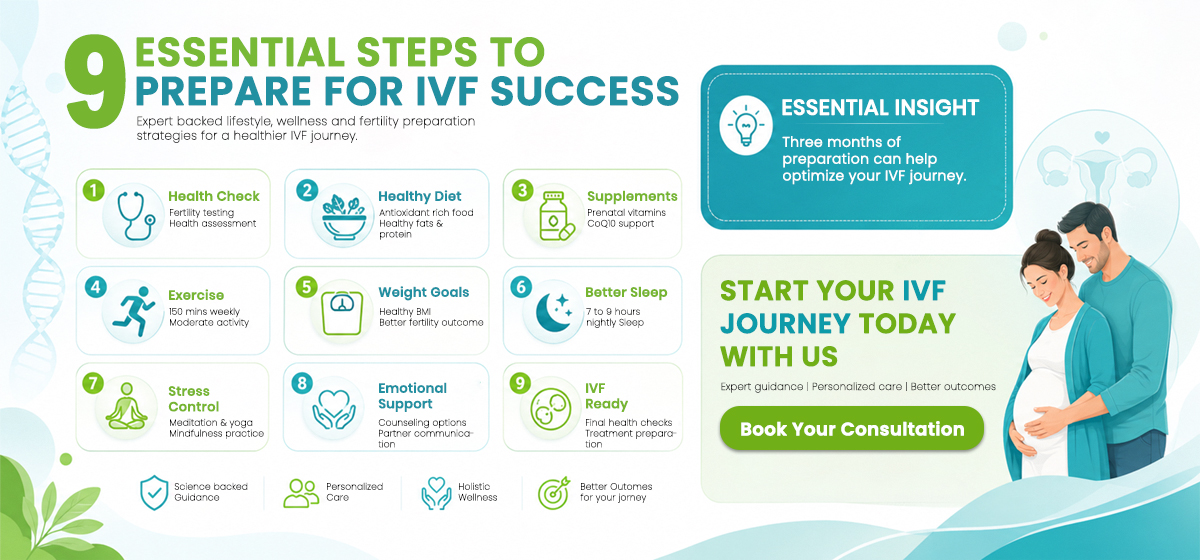
How to Prepare Your Body for IVF: A 3-Month Pre-IVF Plan Updated: June 25, 20268 min read Key Takeaways The...

In Vitro Fertilization (IVF) is a significant decision for many couples, particularly within the context of Nepal's soci...

