IVF Success Rates: What Really Affects Them? Complete 2026 Analysis
1 hour ago, 9 minutes read
IVF success rates vary dramatically between patients and clinics. Understanding what affects your personal success rates helps set realistic expectations and make informed treatment decisions. This comprehensive guide explores the key factors that determine IVF outcomes and success probabilities.
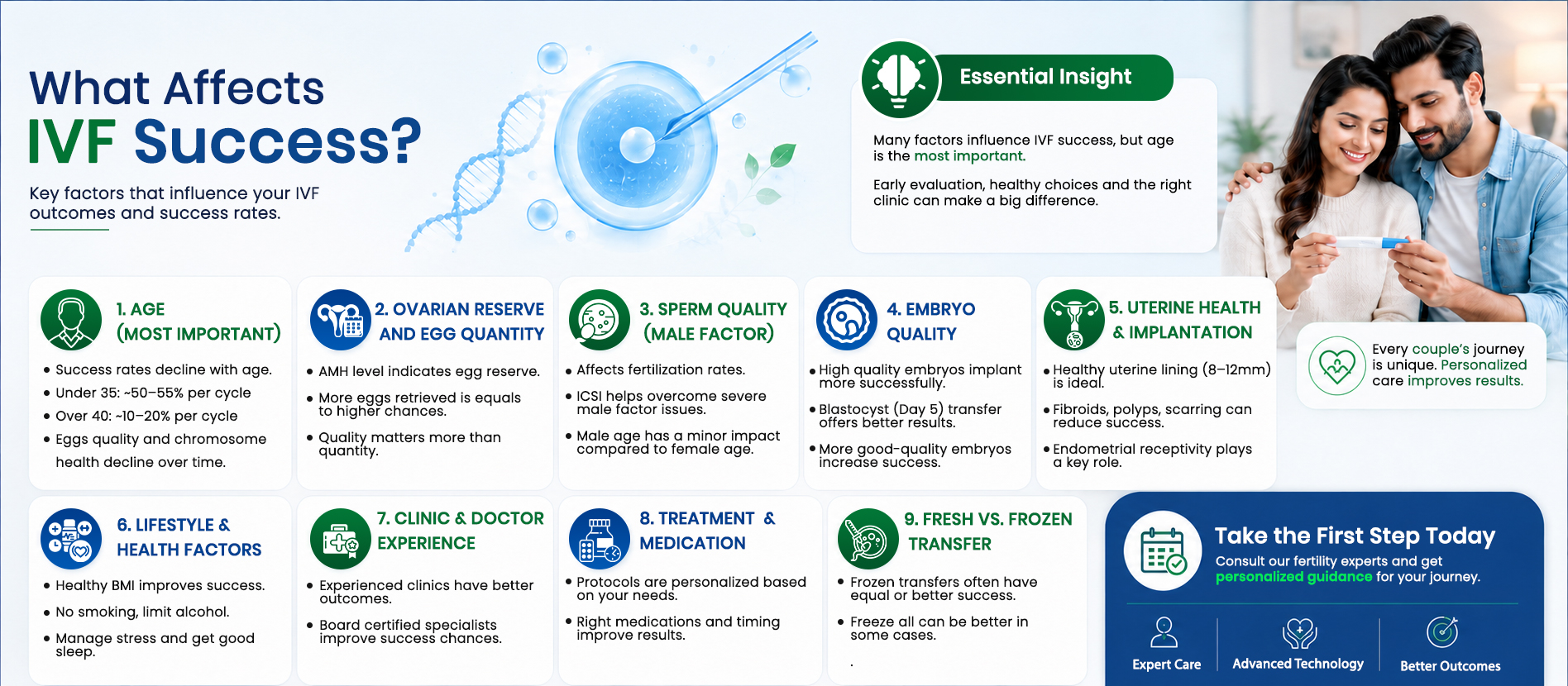
Female age is the single strongest predictor of IVF success. Women under 35 have approximately 50-55 percent success rates per cycle. Women aged 35-37 have approximately 40-45 percent success rates. Women aged 38-40 experience 25-35 percent success rates. Women over 40 have 10-20 percent success rates. Women over 45 have less than 5 percent success rates. Age affects success through egg quality decline and chromosomal abnormalities. Starting IVF before age 37 significantly improves overall outcomes.
Egg quality declines with age. Chromosomal abnormalities increase from approximately 20 percent at age 30 to 40 percent at age 40 and 70 percent at age 45. These abnormalities result in failed fertilization, abnormal embryo development, miscarriage, and reduced live birth rates. PGT-A testing identifies chromosomally normal embryos, significantly reducing miscarriage risk even in older women. Women over 35-40 benefit most from PGT-A testing.
Male age has less dramatic effects on fertility than female age, but impacts success. Sperm quality declines slightly with male age. Men over 50 show decreased sperm motility and morphology. Male age has minor impact on IVF success compared to female age, but paternal age over 45 may slightly reduce success rates.
Anti-Mullerian Hormone (AMH) reflects ovarian reserve. Higher AMH indicates more eggs available for retrieval. AMH correlates with egg number but not egg quality. Women with low AMH may retrieve fewer eggs but can still achieve pregnancy with IVF. AMH helps predict ovarian response and medication dosing but does not determine success alone.
More eggs retrieved generally improves success probability. Retrieval of 8-15 eggs is considered optimal. Women retrieving fewer eggs (less than 5) have lower success rates. Even very low numbers (1-2 eggs) can result in pregnancy. More eggs provide more options for embryo selection and higher cumulative success chances. Older women with fewer eggs may require multiple retrieval cycles.
Sperm quality determines fertilization rates. Normal sperm parameters result in approximately 70-75 percent fertilization with conventional IVF. Low sperm count, poor motility, or abnormal morphology reduce fertilization. ICSI overcomes male factor problems by directly injecting sperm into eggs, resulting in 50-70 percent fertilization rates even with severe sperm abnormalities.
ICSI significantly improves success for male factor infertility. Fertilization rates with ICSI for severe male factor approximate rates with normal sperm. Pregnancy rates and live birth rates are similar between IVF with ICSI and conventional IVF when adequate eggs are available. Male factor alone does not reduce overall IVF success when appropriate protocols are used.
Embryo quality is assessed on day 3 (cleavage stage) or day 5-6 (blastocyst stage). Quality depends on cell number, symmetry, and fragmentation. Grade A embryos (highest quality) have higher implantation rates. Grade B and C embryos have progressively lower success rates. Multiple quality embryos available increases cumulative success across multiple transfers.
Day 5 blastocyst transfer has higher success rates than day 3 cleavage stage transfer. Only approximately 30-50 percent of fertilized eggs develop to blastocyst stage. Reaching blastocyst stage indicates strong developmental potential. Blastocyst transfer allows better embryo selection and improved pregnancy rates. Some fertilized eggs do not reach blastocyst but may still result in healthy pregnancies if transferred at day 3.
Endometrial receptivity describes the uterine lining's ability to accept embryos. Optimal endometrial thickness is approximately 8-12 millimeters. Very thin endometrium (less than 6 millimeters) reduces implantation. Endometrial receptivity varies individually and may be assessed through endometrial receptivity analysis (ERA) testing. Conditions like endometriosis, adenomyosis, and fibroids reduce implantation.
Uterine fibroids distorting the cavity reduce implantation. Polyps interfere with embryo attachment. Scarring from previous surgery reduces receptivity. Uterine abnormalities (septate uterus, unicornuate uterus) may reduce implantation. Evaluation through ultrasound or hysteroscopy identifies problems. Some abnormalities are surgically correctable before IVF.
Body weight affects IVF success. For every unit increase in BMI above 25, pregnancy rates decrease approximately 3-5 percent. Obesity reduces egg quality and increases miscarriage risk. Weight loss before IVF improves success rates. Even modest weight loss of 5-10 percent improves outcomes. Both underweight (BMI less than 18) and overweight/obese patients may experience reduced success.
Smoking reduces IVF success by approximately 30-50 percent. Smoking damages eggs and reduces sperm quality. Alcohol consumption, especially excessive use, reduces success. Caffeine in moderation appears safe, but very high consumption may reduce success. Illicit drug use significantly impairs fertility. Eliminating smoking and minimizing alcohol improves outcomes.
Stress affects fertility through hormonal disruption and inflammation. High stress reduces success rates. Mental health support improves outcomes. Depression and anxiety are common during fertility treatment. Counseling, support groups, and stress reduction techniques improve success. Positive mental health supports better treatment compliance and outcomes.
Clinic experience significantly affects success rates. High-volume clinics often have better outcomes than low-volume clinics. Board-certified reproductive endocrinologists have better success than less-trained providers. Clinic success rates should account for patient population differences. National averages provide benchmarks for comparison. Ask clinics for their specific success rates for your age and diagnosis.
Stimulation protocol affects success. Long GnRH agonist protocol, short protocol, antagonist protocol, and natural cycle protocols have different success rates depending on patient characteristics. Personalized protocol selection based on individual factors optimizes outcomes. Protocol modifications for poor responders improve their success.
Fresh embryo transfer has slightly lower success than frozen transfer in many cases. Frozen transfer allows endometrial optimization and reduces ovarian hyperstimulation risk. Freeze-all strategies (freezing all embryos) improve overall outcomes for some patients, particularly those at OHSS risk. Frozen and fresh transfer success rates are now very similar with modern vitrification techniques.
Our specialists can calculate your personalized success rates based on your age, diagnosis, and treatment options. Schedule consultation to understand your fertility potential.
A: National average IVF success rates are approximately 40-50 percent for women under 35. Success rates decline with age: 40-45 percent at age 35-37, 25-35 percent at age 38-40, and 10-20 percent at age 40-44. Success rates vary significantly between clinics and patient populations.
A: Age is the most significant success factor. Each year after age 30 reduces success approximately 2-3 percent. The decline accelerates after age 35. Starting IVF before age 37 substantially improves outcomes. Women over 40 have dramatically lower success with own eggs but much higher success with donor eggs.
A: Yes. Pre-treatment optimization through weight loss, quitting smoking, reducing stress, and improving nutrition enhances success. Personalized protocols, PGT-A testing, and proper clinic selection improve outcomes. Multiple cycles increase cumulative success. Donor egg IVF offers higher success for older women.
A: Yes. Clinic experience, physician expertise, laboratory quality, and overall success rates significantly affect outcomes. High-volume clinics experienced in your diagnosis often have better results. Compare clinic success rates for patients with your age and diagnosis before choosing your provider.
A: Cumulative success improves significantly with multiple cycles. After 3 cycles, cumulative success typically exceeds 60-75 percent for women under 35. For women over 40, cumulative success is lower but still meaningful. Many couples achieve pregnancy within 2-3 cycles with appropriate protocols.
National IVF helps patients optimize all success factors. From pre-treatment preparation to clinic expertise, we maximize your chances of achieving pregnancy.
Free, no-obligation consultation | Board-certified specialists
News and Articles

Infertility is a deeply personal and often overwhelming challenge, affecting thousands of families across Nepal. As the...
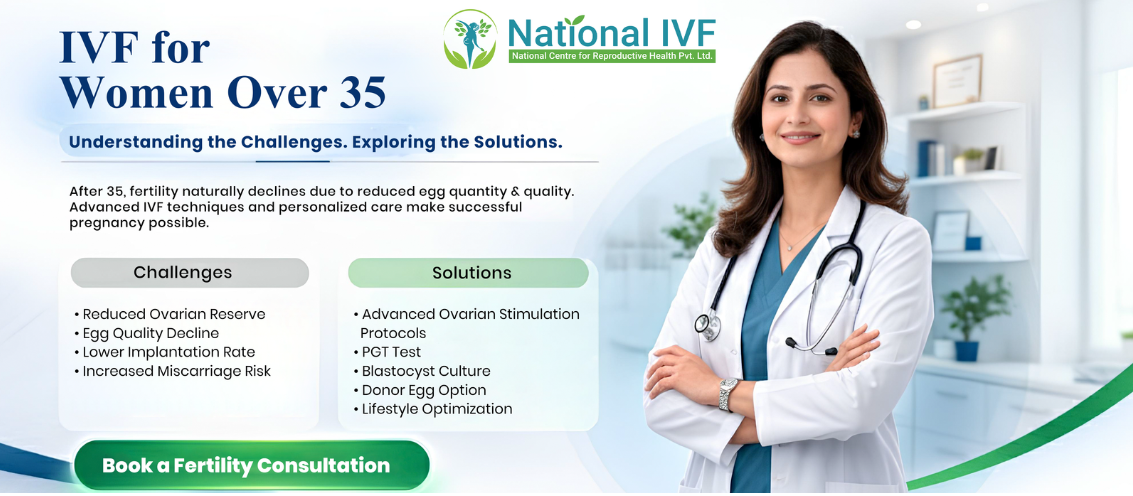
Introduction Age is the most significant factor affecting IVF success. Women over 35 face unique fertility challe...

Introduction When embarking on the journey to parenthood, fertility challenges are often seen as predominantly women'...

