IVF for Women Over 35: Challenges and Solutions
7 months ago, 17 minutes read
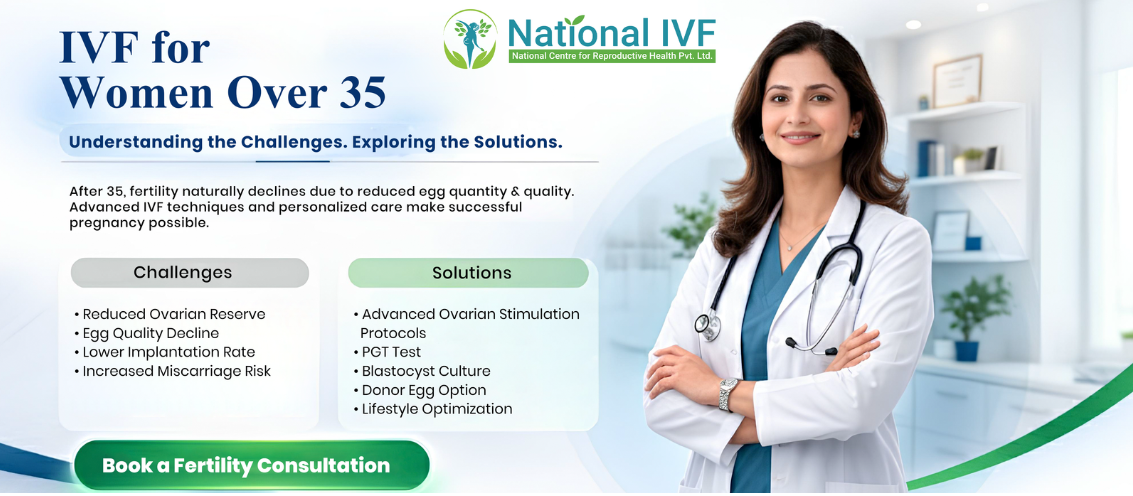
Age is the most significant factor affecting IVF success. Women over 35 face unique fertility challenges related to declining egg quality and ovarian reserve. However, many women successfully achieve pregnancy after 35 with IVF. This comprehensive guide explains age-related fertility challenges and proven strategies to maximize success for women in their mid-30s, 40s, and beyond.
A woman is born with approximately 1-2 million eggs. By puberty, this number decreases to about 300,000 to 400,000 eggs. As women age, the quality of remaining eggs declines significantly. This decline accelerates after age 35, with a more dramatic drop after age 40. Older eggs are more prone to chromosomal abnormalities, which affects fertilization rates, embryo quality, and pregnancy success. Understanding this biological reality helps women make informed decisions about fertility treatment timing.
Chromosomal abnormalities (aneuploidy) occur when embryos have the wrong number of chromosomes. The risk of chromosomal abnormalities increases dramatically with maternal age. For example, Down syndrome (trisomy 21) risk is 1 in 1,500 at age 20, increases to 1 in 400 at age 35, and reaches 1 in 100 at age 40. These chromosomal abnormalities often result in miscarriage or failed implantation. Advanced maternal age is the primary reason for increased miscarriage rates in older women, not issues with the uterus or implantation.
Ovarian reserve refers to the number of remaining eggs. Two key tests measure ovarian reserve: Anti-Mullerian Hormone (AMH) and follicle-stimulating hormone (FSH). AMH is produced by cells surrounding eggs in ovarian follicles. Higher AMH levels indicate better ovarian reserve. FSH levels are measured on days 2-3 of the menstrual cycle. Higher FSH levels suggest diminished ovarian reserve. Women over 35 often have declining AMH and rising FSH levels. These tests help fertility specialists predict ovarian response to stimulation and adjust treatment protocols accordingly.
IVF success rates decline significantly with age. Women under 35 have approximately 50-55 percent success rates per cycle. Women aged 35-37 have approximately 40-45 percent success rates. Women aged 38-40 experience a further decline to 25-35 percent. Women over 40 have success rates of 10-20 percent. Women over 45 have less than 5 percent success rates per cycle. These statistics emphasize the importance of age in fertility outcomes. However, individual results vary based on egg quality, overall health, and treatment protocols.
Women aged 35-37 are still in a relatively favorable window for IVF. Average success rates range from 40-45 percent per cycle. Most women in this age group still have reasonable ovarian reserve and acceptable egg quality. The decline in success rates becomes noticeable but is not yet dramatic. Women in this age group who pursue IVF promptly have good chances of success, often achieving pregnancy within 1-3 cycles. Starting IVF before age 37 significantly improves overall prognosis.
Women aged 38-40 experience a more pronounced decline in success rates, typically ranging from 25-35 percent per cycle. This age group often shows lower ovarian reserve and declining egg quality. Miscarriage rates increase significantly in this age group due to chromosomal abnormalities. Women in this category benefit from accelerated treatment timelines and may want to consider multiple cycles or egg donor options if initial cycles are unsuccessful. Advanced maternal age testing becomes increasingly important.
Women aged 41-43 have significantly reduced success rates with their own eggs, typically 10-20 percent per cycle. Many women in this age group have diminished ovarian reserve and poor egg quality. Miscarriage rates exceed 40 percent. However, pregnancy is still possible. Women in this age group may achieve success with multiple cycles, especially if they maintain excellent health. Many women in this category choose to pursue egg donor IVF, which offers much higher success rates (45-50 percent) because donor egg quality is typically excellent.
Women over 44 have very low success rates with their own eggs, typically less than 5 percent per cycle. Ovarian reserve is usually severely diminished, and egg quality is substantially compromised. Miscarriage risk exceeds 50 percent. Most reproductive endocrinologists recommend egg donor IVF for women over 44 pursuing biological children. However, natural cycle IVF or minimal stimulation approaches may be considered for women who strongly prefer using their own eggs despite very low success probabilities. These approaches carry lower costs but much lower success rates.
Women over 35 with diminished ovarian reserve typically retrieve fewer eggs during egg retrieval. While a woman under 35 might retrieve 15-20 eggs, a woman over 40 may retrieve only 5-10 eggs or fewer. Fewer eggs mean fewer opportunities for fertilization and embryo development. Having only a few eggs increases the importance of egg quality. Specialists may recommend continuing with even small numbers of eggs, as some women conceive with just one or two mature eggs.
Fertilization rates decline with age. While fertilization rates in younger women typically exceed 70 percent, rates in women over 40 may be 40-60 percent or lower. This lower fertilization rate means even fewer embryos available for transfer. If only a few eggs are retrieved and fertilization rates are low, the number of viable embryos may be very limited. This emphasizes the importance of egg quality optimization before IVF in older women.
Miscarriage risk increases substantially with age. Women under 35 have a miscarriage rate of approximately 15 percent. Women aged 35-39 have approximately 25 percent miscarriage rates. Women aged 40-44 have approximately 40 percent miscarriage rates. Women over 45 have approximately 50 percent miscarriage rates. These increases are primarily due to chromosomal abnormalities. Preimplantation genetic testing (PGT-A) can identify chromosomally normal embryos, significantly reducing miscarriage risk even in older women.
Due to lower success rates per cycle, women over 35 typically require more IVF cycles to achieve pregnancy. A woman under 35 might achieve pregnancy within 1-2 cycles, while a woman over 40 may require 3-5 or more cycles. This longer timeline increases total treatment costs and emotional stress. It also creates time pressure, as women become aware that each passing month further decreases their fertility potential.
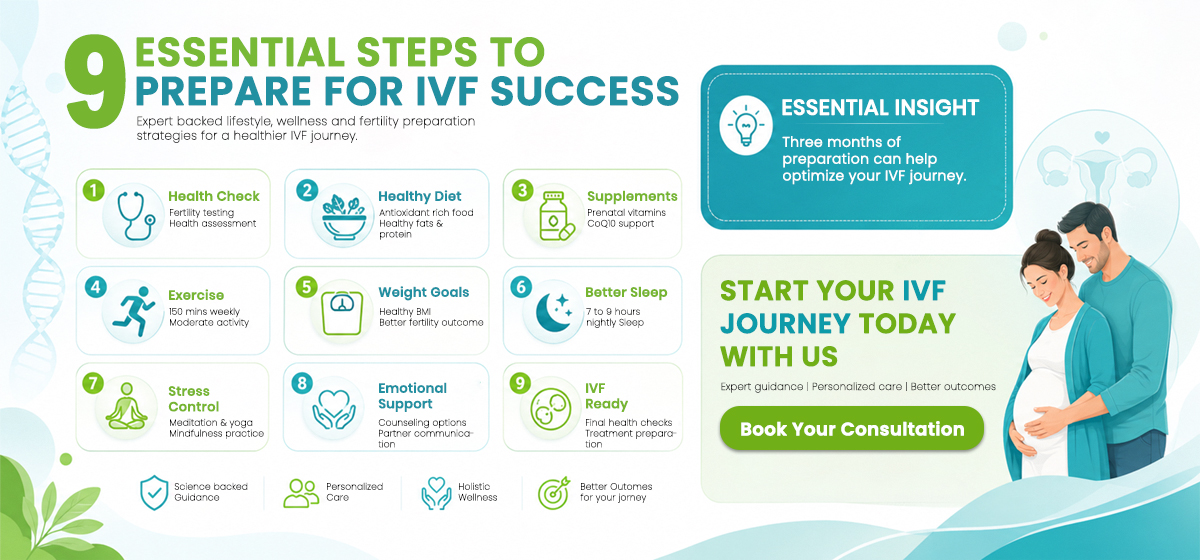
While age-related egg quality decline cannot be reversed, evidence supports that egg quality can be modestly improved through lifestyle optimization. A 3-6 month pre-treatment period allows time for egg development optimization. Focus on antioxidant-rich foods, CoQ10 supplementation (500-600 mg daily), prenatal vitamins with folate and iron, regular moderate exercise, stress reduction, adequate sleep, and weight optimization. This period allows development of eggs that will be ovulated during the actual IVF cycle, potentially improving outcomes.
Preimplantation genetic testing for aneuploidy (PGT-A) screens embryos for chromosomal abnormalities before transfer. This testing is particularly valuable for women over 35, as it identifies the chromosomally normal embryos most likely to result in healthy pregnancies and live births. PGT-A significantly reduces miscarriage risk and increases success rates even in older women. While PGT-A adds cost and requires freezing embryos for testing, the improved outcomes often justify the additional investment for women over 35-40.
For women over 40, egg donor IVF offers significantly higher success rates (45-55 percent) compared to using own eggs (10-20 percent). Donor eggs are typically from younger women aged 21-32, whose eggs have excellent quality and few chromosomal abnormalities. Egg donation allows older women to become pregnant and experience pregnancy and childbirth. The genetic connection is through the father and mitochondrial DNA. Many women find egg donation to be an excellent option that enables them to achieve parenthood.
For women over 35 with low ovarian reserve, undergoing multiple retrieval cycles and freezing all resulting embryos before transfer (freeze-all approach) may improve overall outcomes. This strategy allows accumulation of multiple embryos, increasing the chances of having chromosomally normal embryos available for transfer. While this extends the treatment timeline, it may reduce total number of cycles needed and provide more options. This approach is particularly valuable for women aged 35-40.
The standard long GnRH agonist protocol remains effective for many women over 35. This protocol involves downregulating the pituitary, then stimulating with FSH. It typically results in good follicle synchronization and adequate egg retrieval. The long protocol may be particularly beneficial for women with normal AMH levels who still have reasonable ovarian reserve.
Mini IVF uses lower doses of FSH and shorter stimulation periods, resulting in retrieval of fewer but potentially higher quality eggs. This approach causes less disruption to natural cycles and may reduce side effects. While mini IVF produces fewer eggs, the eggs may be of better quality. Success rates with mini IVF are lower overall, but for women over 40 with diminished reserve, mini IVF may be a reasonable option.
Natural cycle IVF involves retrieving the single egg that develops naturally each month, with minimal or no medications. This approach minimizes hormone exposure and is less costly than conventional IVF. Success rates per cycle are very low, but cumulative success over multiple cycles may be reasonable. Natural cycle IVF is an option for women over 40 who strongly prefer minimal intervention and are willing to undergo multiple retrieval cycles.
Women over 35 face a time-sensitive decision. Continuing to attempt natural conception while aging further decreases fertility potential. After 12 months of unprotected intercourse, medical evaluation for infertility is recommended. For women over 35, this timeline may be compressed to 6 months. Delaying treatment may result in further age-related fertility decline. Starting IVF promptly at age 35-37 typically offers better outcomes than waiting until age 40-42.
Natural pregnancy rates after age 35 decline significantly. For a 35-year-old woman, natural conception probability is approximately 20 percent per cycle. By age 40, this decreases to approximately 5 percent per cycle. IVF success rates are higher: approximately 40-45 percent per cycle at age 35-37 and 25-35 percent at age 38-40. For women over 40, IVF success (10-20 percent per cycle) substantially exceeds natural conception rates (less than 5 percent per cycle).
IVF is expensive but offers dramatically higher success rates for women over 35. When compared to continued attempts at natural conception with very low success rates, IVF often provides better value from a cost-per-pregnancy perspective. Additionally, IVF offers more control over timing and diagnostic capabilities through testing like PGT-A. For most women over 35 seeking pregnancy, IVF offers the best chance of success.
The decision between natural conception and IVF depends on individual circumstances. Factors include desire to avoid medical intervention, ovarian reserve status (AMH levels), overall health, partner fertility status, time availability, and emotional preferences. Your fertility specialist can help you evaluate these factors and make an informed decision appropriate for your situation.
Women over 35 often experience anxiety related to their age and fertility. The biological reality of age-related fertility decline can create pressure and stress. Acknowledging these feelings is important. Connecting with support groups, working with counselors experienced in fertility issues, and focusing on factors within your control helps manage anxiety effectively.
Understanding realistic success rates for your age group helps you prepare emotionally for various outcomes. While many women succeed on their first or second cycle, others may require multiple cycles or alternative approaches. Building realistic expectations reduces disappointment and allows you to make informed decisions about how many cycles to pursue.
Support from partners, family, friends, and professionals is invaluable during IVF treatment. Fertility counselors can help address emotional challenges. Support groups connect you with others going through similar experiences. Mental health support improves treatment outcomes and overall well being.
Preparing emotionally and practically for the possibility of multiple cycles helps reduce stress. Planning how many cycles you are willing to pursue, establishing realistic financial planning, and scheduling treatment around work and life responsibilities contributes to successful treatment.
Get your age-specific success assessment from our fertility specialists. We help women over 35 optimize their chances of successful pregnancy.
A: At age 35: approximately 40-45 percent per cycle. At age 40: approximately 25-35 percent per cycle. At age 45: less than 5 percent per cycle. These are approximate averages; individual results vary based on ovarian reserve, egg quality, and overall health. Success rates are significantly higher with egg donor IVF (45-55 percent) regardless of recipient age.
A: Yes, women over 35 can use their own eggs. Women aged 35-37 have good success with own eggs. Women aged 38-40 have moderate success. Women over 40 have lower success rates with own eggs but pregnancy is still possible, especially with healthy eggs and optimal conditions. Many women over 40 choose egg donor IVF due to significantly higher success rates.
A: Yes, PGT-A testing is increasingly recommended for women over 35, and especially for women over 38-40. PGT-A identifies chromosomally normal embryos, significantly reducing miscarriage risk and increasing success rates. PGT-A adds cost and requires freezing embryos, but for older women with increased miscarriage risk, the benefits typically justify the additional investment.
A: Egg donor IVF should be considered when: 1) Age is over 40 and success rates with own eggs are very low; 2) Ovarian reserve testing (AMH) shows severely diminished reserve; 3) Multiple cycles with own eggs have been unsuccessful; 4) Genetic disorders are a concern; 5) You desire much higher success rates. Many fertility specialists recommend discussing egg donation for women over 40-42.
A: This decision depends on age, ovarian reserve, financial resources, and emotional readiness. Women aged 35-37 might pursue 2-3 cycles with own eggs. Women aged 38-40 might pursue 2-3 cycles before considering donors. Women over 40 may prefer to move to egg donation sooner given very low success rates with own eggs. Your specialist can help you determine an appropriate plan based on your individual circumstances.
National IVF specializes in treating women over 35 with advanced protocols and proven success strategies. Book your consultation with our specialists today.
Free, no-obligation consultation | Board-certified specialists

Introduction Infertility is no longer a silent struggle. In today’s world, more individuals and couples are turni...
How to Prepare Your Body for IVF: A 3-Month Pre-IVF Plan Updated: June 25, 20268 min read Key Takeaways The...

Starting a family is a dream shared by many couples, but for some, the journey to parenthood is not always as simple as...

