Male Infertility: Complete Guide to Treatments, ICSI, IVF Options & Success Rates
1 month ago, 16 minutes read
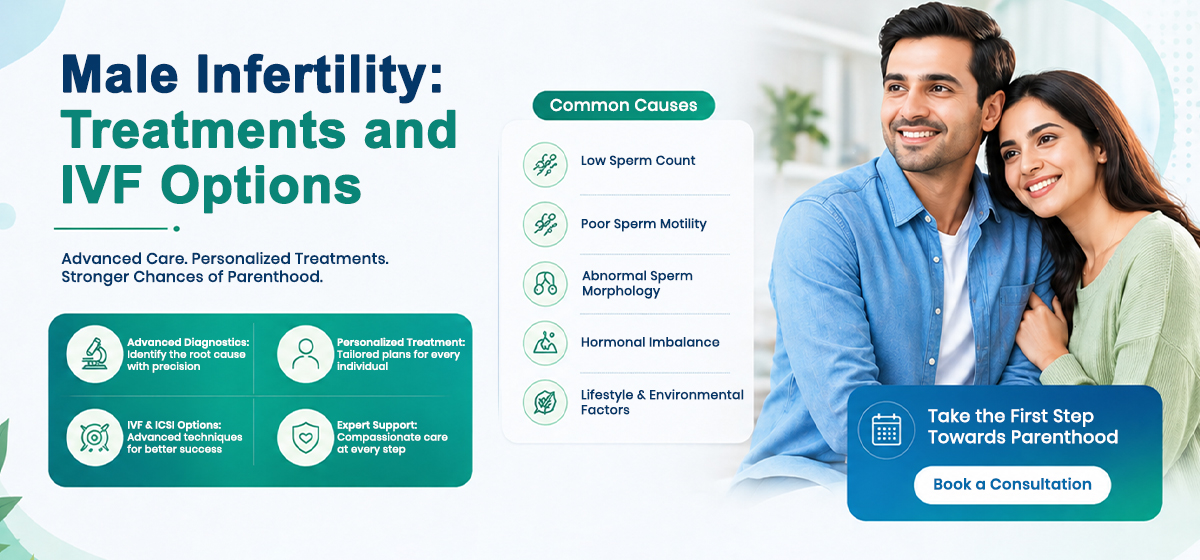
Male factor infertility accounts for 30-40 percent of infertility cases. Causes range from low sperm count to poor motility and abnormal morphology. Fortunately, modern fertility treatments including ICSI (Intracytoplasmic Sperm Injection) and IVF offer highly effective solutions. This comprehensive guide explains male infertility causes, treatment options, and success rates.
Male infertility stems from various causes. Varicocele (enlarged veins in the scrotum) reduces sperm quality. Infection in reproductive organs impairs sperm production. Hormonal problems (low testosterone) affect sperm development. Ejaculation disorders prevent sperm release. Previous surgery, injury, or chemotherapy may damage reproductive tissue. Genetic factors and chromosomal abnormalities affect sperm production. Lifestyle factors including smoking, excessive alcohol, drug use, obesity, and stress reduce sperm quality. Advancing age slightly decreases sperm quality. Many cases of male infertility have identifiable causes amenable to treatment.
Semen analysis is the primary test for male infertility. Normal parameters include: semen volume at least 1.5 milliliters, sperm concentration of at least 16 million per milliliter, total sperm count of at least 39 million per ejaculate, motility (progressive forward movement) of at least 40 percent, and normal morphology of at least 4 percent. Abnormal semen analysis parameters are classified as oligospermia (low count), asthenospermia (poor motility), teratospermia (abnormal morphology), or combinations thereof. Multiple semen analyses are recommended, as parameters fluctuate.
Oligospermia, defined as sperm concentration below 16 million per milliliter, reduces natural conception probability. Causes include testicular failure (hormonal problems, previous chemotherapy, infection), obstruction of sperm ducts, or unexplained causes. Even severely low sperm counts do not prevent fertility through IVF or ICSI. If sperm are present, even in tiny numbers, they can be used for IVF.
Asthenospermia, characterized by reduced sperm movement, reduces natural conception probability even if sperm count is normal. Causes include hormonal abnormalities, infection, genetic factors, and lifestyle issues. Teratospermia, where most sperm have abnormal shape, also reduces fertility. ICSI bypasses both motility and morphology problems by injecting a single sperm directly into an egg, enabling fertilization even with poor sperm quality.
Azoospermia, the absence of sperm in ejaculate, can be obstructive or non-obstructive. Obstructive azoospermia results from blocked ducts (absence of vas deferens, blockage from infection or trauma). Non-obstructive azoospermia results from testicular failure (hormonal problems, genetic factors, chemotherapy exposure, infection). Obstructive azoospermia is often surgically correctable. Non-obstructive azoospermia may require testicular sperm retrieval (TESE) for IVF or ICSI. Modern techniques can extract sperm even in cases of non-obstructive azoospermia.
Semen analysis should be performed by accredited laboratories following WHO guidelines. At least two samples taken 2-3 weeks apart are recommended for accurate diagnosis. Complete analysis includes volume, concentration, total count, motility (progressive and non-progressive), vitality (percentage of live sperm), morphology, and leukocyte count. Advanced testing may include sperm DNA fragmentation, functional assessments, and genetic screening.
Hormonal evaluation includes serum testosterone, FSH (follicle-stimulating hormone), and LH (luteinizing hormone) levels. Low testosterone indicates primary testicular failure or hypothalamic-pituitary dysfunction. Elevated FSH suggests primary testicular failure. These hormonal patterns help determine whether hormonal therapy might improve sperm production.
Genetic testing identifies chromosomal abnormalities affecting fertility. Karyotyping detects chromosomal abnormalities like Klinefelter syndrome (47, XXY). Y chromosome microdeletion testing identifies deletions in genes responsible for sperm production. CFTR gene mutations (cystic fibrosis) cause absence of vas deferens. Genetic testing is particularly important for azoospermia. Genetic abnormalities limit fertility treatment options but do not prevent fatherhood through IVF with sperm retrieval.
Testicular ultrasound assesses testicular size, echogenicity, and presence of varicocele. Testicular biopsy or fine needle aspiration may be performed in azoospermic men to determine whether sperm production is occurring (obstructive vs. non-obstructive). Sperm extracted during diagnostic biopsy can be frozen and used for future IVF cycles, allowing men to proceed directly to IVF without separate retrieval procedures.
Lifestyle changes improve sperm quality over 3 months (the duration of sperm production). Eliminate smoking, reduce alcohol consumption, avoid illicit drugs. Weight loss in overweight men improves sperm parameters. Regular moderate exercise improves fertility. Stress reduction techniques help. Avoid prolonged heat exposure (hot tubs, tight underwear). These modifications improve sperm quality without medications.
Hormonal medications (clomiphene, testosterone) can improve sperm production in men with hormonal abnormalities. Antibiotics treat infections affecting sperm quality. Vitamins and supplements including CoQ10, L-carnitine, vitamin C, vitamin E, zinc, and selenium may improve sperm parameters. Pentoxifylline improves sperm motility in some men. Duration of treatment is typically 3 months to allow for new sperm production.
Varicocele repair (ligation or embolization) improves sperm parameters in approximately 50 percent of men and improves natural conception rates. Microsurgical vasectomy reversal can restore sperm to ejaculate in men seeking biological children. Transurethral resection of the ejaculatory duct addresses obstructive azoospermia from ejaculatory duct obstruction. Reconstructive urologic surgery can bypass blocked ducts in some men. Successful surgery may eliminate need for IVF.
IVF becomes necessary when non-surgical treatments do not restore sufficient sperm for natural conception. Severe oligospermia, asthenospermia, teratospermia, obstructive azoospermia unresponsive to surgery, or non-obstructive azoospermia all warrant IVF evaluation. Additionally, if female partner has concurrent fertility issues, IVF may be the most efficient approach.
ICSI (Intracytoplasmic Sperm Injection) is a specialized IVF procedure where a single sperm is injected directly into an egg using a fine glass pipette under high magnification. The injected sperm fertilizes the egg, resulting in embryo development. ICSI bypasses normal fertilization barriers including low sperm count, poor motility, and abnormal morphology. ICSI has revolutionized treatment of male factor infertility, enabling men with severe sperm abnormalities to father biological children.
Conventional IVF places eggs and sperm together in culture dishes, allowing sperm to fertilize eggs naturally. This approach requires adequate sperm count, motility, and morphology. ICSI injects sperm directly into eggs, bypassing these requirements. With ICSI, even a single viable sperm per cycle can fertilize an egg. ICSI success rates with severely abnormal sperm approximate rates with normal sperm when one healthy sperm is available.
ICSI is indicated for: severe oligospermia (less than 5 million sperm per milliliter), asthenospermia (less than 20 percent motility), teratospermia (less than 4 percent normal morphology), combined abnormalities, previous fertilization failure with conventional IVF, azoospermia with surgically retrieved sperm, or ejaculation problems. ICSI is also recommended for single men or those using frozen sperm with lower quality, where maximum fertilization rates are important.
Fertilization rates with ICSI for severe male factor infertility are approximately 50-70 percent. Embryo development and pregnancy rates approximate those of standard IVF. Multiple studies confirm that children born from ICSI have normal development, health outcomes, and no increased birth defect rates. ICSI has enabled millions of men with infertility to father biological children.
Men with low sperm counts benefit from IVF with ICSI. Even very low counts (under 1 million) can be treated. The few sperm retrieved are used for ICSI, fertilizing eggs effectively. Multiple embryos may develop from a single specimen containing minimal sperm.
Men with poor sperm motility benefit greatly from ICSI. Immotile sperm cannot fertilize eggs naturally but can be used for ICSI, where the sperm need not move independently. ICSI allows men with severe asthenospermia to achieve fatherhood.
Men with severely abnormal sperm shapes benefit from ICSI. Morphology does not affect ICSI success. As long as at least one structurally normal sperm is available, ICSI can result in fertilization.
Men with absent ejaculation due to spinal cord injury, diabetes, or prior surgery may have sperm in urine (retrograde ejaculation) or in the bladder. Urine can be centrifuged to recover sperm. Alternatively, electroejaculation or vibration can stimulate sperm release. These recovered sperm can be used for IVF with ICSI.
Men with azoospermia (no sperm in ejaculate) may have sperm in testicular tissue. TESE (Testicular Sperm Extraction) involves biopsying testicular tissue to extract sperm. PESE (Percutaneous Epididymal Sperm Extraction) retrieves sperm from the epididymis. Retrieved testicular sperm can be frozen and used for IVF with ICSI. Success rates depend on whether azoospermia is obstructive or non-obstructive.
TESE involves needle or surgical biopsy of testicular tissue under local anesthesia. Tissue is processed and searched microscopically for sperm. Success rates are highest when testicular tissue shows normal spermatogenesis. TESE can be repeated multiple times if needed.
PESE retrieves sperm from the epididymis using needle aspiration under local anesthesia. This technique is less invasive than TESE. Success depends on whether the epididymis contains sperm, which is likely in obstructive azoospermia but unlikely in non-obstructive azoospermia.
MESA uses surgical microscopes to precisely identify and aspirate sperm from the epididymis. MESA typically retrieves higher sperm concentrations than PESE and allows freezing of multiple specimens for future use. MESA requires surgical expertise but is highly effective for obstructive azoospermia.
Sperm retrieved during TESE, PESE, or MESA can be frozen and banked for future use. This allows men with azoospermia to complete sperm retrieval separately from their partner's IVF cycle, reducing coordination complexity. Frozen sperm remain viable for years, allowing multiple IVF attempts from a single retrieval.
Fertilization rates with ICSI for male factor infertility typically range from 50-70 percent. Fertilization success depends on sperm quality (percentage viable and morphologically normal). Even severe oligospermia with 1-2 sperm can result in fertilization through ICSI.
Pregnancy rates with IVF and ICSI for male factor infertility are comparable to standard IVF when adequate eggs are available. The woman's age remains the strongest predictor of success. Male factor alone does not reduce pregnancy potential if eggs are normal quality.
Extensive research confirms that ICSI does not increase birth defect rates compared to natural conception or conventional IVF. Children conceived through ICSI have normal health outcomes and development. No increased genetic or developmental abnormalities are observed.
Most men with male factor infertility who pursue IVF with ICSI achieve pregnancy within 2-3 cycles if female partner is young with normal ovarian reserve. Success accumulates across multiple cycles, with cumulative pregnancy rates exceeding 70-80 percent.
A healthy diet rich in antioxidants, vitamins, and minerals supports sperm production. Include fatty fish (omega-3 fatty acids), leafy greens, berries, nuts, seeds, whole grains, and lean proteins. Limit processed foods and sugar. Adequate hydration is important. These dietary changes improve sperm parameters over 2-3 months.
Antioxidant supplements support sperm health. CoQ10 (500-1000 mg daily) improves motility and morphology. Vitamin C, vitamin E, selenium, and zinc are antioxidants supporting sperm function. L-carnitine may improve sperm motility. These supplements have modest but measurable benefits on semen parameters.
Regular moderate exercise (at least 150 minutes weekly) improves sperm parameters. Weight loss in overweight men improves fertility. Avoid extreme exercise (marathons, heavy weight lifting) as excessive physical stress may temporarily reduce sperm quality. Walking, swimming, cycling, and sports are ideal.
Eliminate smoking, which damages sperm DNA and reduces motility. Minimize alcohol consumption. Avoid illicit drugs, which negatively affect sperm production. These lifestyle changes improve sperm parameters within weeks to months.
Male infertility carries social stigma related to masculinity, though it is a common medical condition. Men may experience shame or embarrassment. Understanding that infertility is a medical issue, not a personal failing, helps men process emotions and seek appropriate treatment.
Open communication between partners is essential. Both partners should understand the diagnosis and treatment plan. Working together as a team helps navigate the fertility journey. Many couples find couples counseling helpful.
Fertility counseling helps men process emotions and develop coping strategies. Support groups connect men experiencing male factor infertility. Mental health professionals experienced with fertility issues provide valuable support.
Understanding realistic success rates helps men and their partners prepare emotionally. Most men with male factor infertility achieve fatherhood through IVF with ICSI. Building realistic expectations reduces disappointment and supports emotional well-being.
Our fertility specialists are experienced in treating male factor infertility with ICSI and advanced protocols. Schedule your consultation for personalized treatment options.
A: Lifestyle modifications and supplements may improve sperm parameters modestly, but severely low counts typically require IVF with ICSI for pregnancy. Natural treatments take 3 months to show benefits (sperm production cycle). If natural conception has not occurred after trying lifestyle changes for several months, IVF evaluation is recommended.
A: ICSI is a procedure where a single sperm is injected into an egg using a micromanipulator. ICSI is indicated for severe oligospermia, asthenospermia, teratospermia, azoospermia with retrieved sperm, or previous fertilization failure. ICSI enables men with severe sperm abnormalities to father biological children.
A: Pregnancy rates with IVF and ICSI for male factor infertility are comparable to standard IVF (40-50 percent per cycle in women under 35). Male factor alone does not reduce success when female partner is young with normal ovarian reserve. Success accumulates across multiple cycles, with cumulative pregnancy rates exceeding 70-80 percent.
A: Treatment depends on azoospermia type. Obstructive azoospermia (blocked ducts) may be surgically correctable. Non-obstructive azoospermia (testicular failure) may respond to hormonal therapy in some cases. Even when not surgically correctable, testicular sperm extraction (TESE) can usually retrieve sperm for IVF with ICSI.
A: Sperm production (spermatogenesis) takes approximately 74 days. Lifestyle changes, medications, and supplements require 3-6 months to show benefits in semen parameters. Repeat semen analysis should be performed after this time to assess whether improvements have occurred.
National IVF specializes in treating male factor infertility with ICSI and advanced protocols. Contact us for comprehensive male fertility evaluation and treatment.
Free, no-obligation consultation | Board-certified specialists
News and Articles

Infertility is one of the most significant challenges a couple can face. Struggling to conceive affects emotional, physi...

When it comes to reproductive health and fertility care, choosing the right expert is the most crucial decision a couple...

Introduction When embarking on the journey to parenthood, fertility challenges are often seen as predominantly women'...

