Can Your Diet Affect Fertility? Foods to Avoid
Key Takeaways
- Diet affects fertility mainly through hormone balance, insulin regulation, and the antioxidant protection available to developing eggs and sperm.
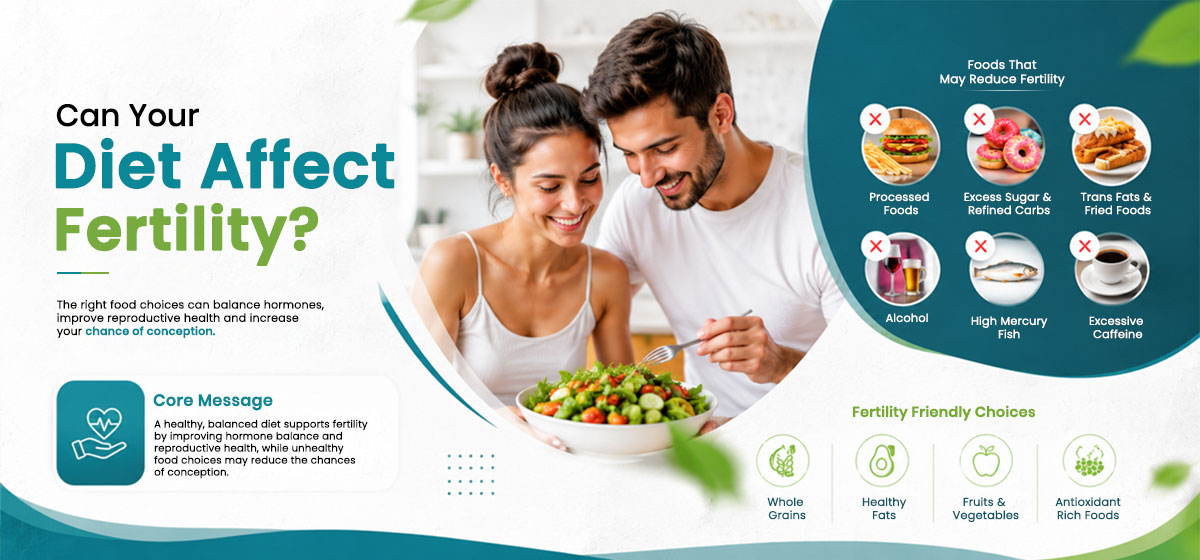
- Trans fats, added sugar, processed meat, high-mercury fish, alcohol, and excess caffeine are the foods most consistently linked to lower fertility.
- Whole grains, healthy fats, and antioxidant-rich produce support ovulation, egg quality, and sperm health.
- Diet changes take about three months to show an effect, and they work best alongside a proper fertility evaluation, not instead of one.
Yes, your diet can affect fertility. What you eat influences hormone balance, insulin levels, egg quality, and sperm health, all of which play a role in whether and how quickly you conceive. This isn't about chasing a "perfect" diet. It's about understanding which foods work against a fertility problem and which ones support your reproductive health, so you can make informed choices while you're trying to conceive. Below is what the research says about foods to avoid, foods to add, and when it's time to see a fertility specialist.
How Diet and Fertility Are Connected
Food is not just fuel. It's raw material your body uses to build hormones, regulate insulin, and support the cells that eventually become eggs and sperm. When your diet is out of balance, those processes can slow down or misfire.
The Role of Hormones in Reproductive Health
Reproduction runs on hormones like estrogen, progesterone, and testosterone, and all three are sensitive to what you eat. Blood sugar spikes from sugary or refined foods force the body to release extra insulin, and consistently high insulin levels can disrupt ovulation and worsen conditions like PCOS. Healthy fats, on the other hand, are the building blocks for the hormones the reproductive system relies on.
How Nutrition Affects Egg and Sperm Quality
Eggs and sperm develop over months, not days, so the nutrients available during that window matter. Antioxidants like vitamin C, vitamin E, and folate help protect eggs and sperm from oxidative stress, a type of cellular damage linked to lower fertility in both men and women. A nutrient-poor diet over several months can measurably affect egg and sperm quality by the time you're ready to conceive.
Foods That May Harm Fertility
These are the foods most consistently linked to reduced fertility in clinical research.
Trans Fats and Processed Foods
Trans fats show up in fried foods, packaged baked goods, and some margarines. They increase inflammation and insulin resistance, both of which interfere with ovulation. Higher trans fat intake has been associated with a greater risk of ovulatory infertility, particularly when trans fats replace healthy fats in the diet.
High-Sugar and Refined Carbohydrate Foods
White bread, sugary cereals, pastries, and soda cause rapid blood sugar spikes. Over time, this pattern contributes to insulin resistance, which is closely tied to PCOS, one of the most common causes of a fertility problem in women trying to conceive.
Excess Red and Processed Meat
Occasional red meat isn't the issue. The concern is a diet heavy in processed meats like bacon, sausage, and deli meats, which have been linked to inflammation and, in some studies, lower sperm quality in men.
High-Mercury Fish
Fish like swordfish, king mackerel, shark, and tilefish carry high mercury levels. Mercury accumulates in the body and can interfere with hormone signaling and fetal development, so it's worth limiting well before conception, not just during pregnancy.
Alcohol and Its Impact on Fertility
Alcohol affects fertility in both men and women. In women, regular drinking can disrupt ovulation and hormone levels. In men, it can lower testosterone and reduce sperm count and motility. Most fertility specialists recommend cutting back significantly, or stopping altogether, while trying to conceive.
Excess Caffeine
Moderate caffeine, around 200mg a day or roughly one 12-ounce cup of coffee, hasn't shown strong links to fertility problems. Higher intake, especially above 300mg a day, has been associated with longer time to conception in some studies. If you're a heavy coffee drinker, cutting back is a reasonable, low-risk step.
Foods That Support Fertility
Just as certain foods work against fertility, others actively support it.
Whole Grains and Fiber-Rich Foods
Oats, quinoa, brown rice, and legumes digest more slowly than refined carbs, which keeps blood sugar and insulin more stable. Stable insulin levels support regular ovulation, a foundational piece of natural conception.
Healthy Fats (Omega-3s, Avocados, Nuts)
Omega-3 fatty acids, found in fatty fish, walnuts, chia seeds, and flaxseed, support hormone production and have been linked to improved egg quality and better sperm morphology. Avocados and olive oil are also excellent sources of the monounsaturated fats the body needs for hormone synthesis.
Antioxidant-Rich Fruits and Vegetables
Berries, leafy greens, citrus fruits, and colorful vegetables deliver antioxidants that help protect reproductive cells from damage. Aim to fill half the plate with a variety of colors at most meals. This single habit does more for fertility nutrition than any individual "superfood."
Fertility Diet Tips for Men vs. Women
Fertility is a two-person equation, and nutrition plays a role for both partners.
Nutrition and Female Fertility
Women benefit most from a diet that stabilizes blood sugar and supports hormone balance: whole grains, healthy fats, folate-rich vegetables, and adequate protein. Folate in particular is essential, both for ovulation support and for early fetal development once pregnancy occurs.
Nutrition and Male Sperm Health
Sperm production takes about 74 days, so dietary changes made today won't show results overnight, but they will show results. Zinc, found in shellfish, pumpkin seeds, and legumes, along with selenium and antioxidant-rich foods, has been linked to improved sperm count, motility, and morphology in research studies.
Other Lifestyle Factors That Matter
Diet is powerful, but it doesn't work in isolation.
Weight and Fertility
Both very low and very high body weight can disrupt hormone balance and ovulation. Even a modest weight change, in either direction, can sometimes restore regular cycles for women whose weight is affecting fertility.
Exercise, Stress, and Sleep
Moderate exercise supports insulin sensitivity and hormone balance, while excessive high-intensity exercise can have the opposite effect. Chronic stress and poor sleep both raise cortisol, a hormone that can interfere with reproductive hormone signaling when it stays elevated for long periods.
When to See a Fertility Specialist
Diet and lifestyle changes are a meaningful starting point, but they aren't a substitute for medical evaluation when conception isn't happening on its own. Consider scheduling a consultation with a fertility clinic if:
- You're under 35 and haven't conceived after 12 months of trying.
- You're 35 or older and haven't conceived after 6 months of trying.
- You have irregular or absent periods.
- You have a known condition like PCOS, endometriosis, or a prior fertility problem.
- Your partner has known sperm health concerns.
If you've been making dietary changes for a few months without results, that's a reasonable point to bring in a fertility specialist rather than waiting longer on your own.
How National IVF Center Approaches This
National IVF, located centrally at Kantipath, Jamal, Kathmandu, combines nutritional guidance with hormonal, ovulatory, and diagnostic testing before recommending fertility treatment, the same evidence-based approach that has made it one of the top fertility centers in Kathmandu for couples working through a fertility problem.
What sets this apart is that every stage of care sits under one roof. Nutritional counseling, hormone testing, and semen analysis are handled alongside ovulation induction and IUI, and if a more advanced path is needed, so are IVF, ICSI, PGT, and surgical sperm retrieval. Patients don't have to be referred elsewhere as their diagnosis or treatment plan develops; the same fertility care team follows the case from the first consultation through to pregnancy.
The clinic is led by Dr. Usha Karki, Clinical Director, whose close monitoring and evidence-based approach have earned National IVF a 5-star rating across its Google reviews, with patients specifically highlighting clear counseling and a calm, modern clinic environment. For couples looking to combine dietary changes with a full fertility evaluation, having one experienced fertility specialist in Nepal oversee every stage is a meaningful part of why National IVF is regarded as one of the best fertility centers in Kathmandu to begin that evaluation.
Not Sure If Diet Alone Will Solve Your Fertility Problem?
Our fertility specialists provide comprehensive hormone testing, ovulation assessment, nutritional guidance, and personalized fertility treatment plans to help you conceive with confidence.
Book Your Free ConsultationFrequently Asked Questions
Q: Can changing my diet alone fix a fertility problem?
A: Diet can improve the conditions for conception, especially in cases related to insulin resistance or nutrient deficiencies, but it can't resolve structural issues like blocked fallopian tubes or severe male factor infertility. A fertility clinic can help identify whether diet alone is enough or whether treatment is needed.
Q: How long before diet changes affect fertility?
A: Most specialists recommend giving dietary changes at least three months to show an effect, since that's roughly how long it takes for a new egg or sperm cell to fully mature.
Q: Is dairy bad for fertility?
A: The research is mixed. Some studies suggest full-fat dairy may support fertility more than low-fat dairy, likely due to hormone content, but individual tolerance varies. Moderate intake is generally considered fine.
Q: Should I avoid all caffeine while trying to conceive?
A: You don't need to eliminate caffeine entirely. Keeping intake under 200mg a day, about one cup of coffee, is considered a safe target by most fertility specialists.
Q: Can men improve sperm quality through diet?
A: Yes. Diets rich in antioxidants, zinc, selenium, and omega-3 fatty acids have been linked to improved sperm count, motility, and morphology in multiple studies.
Q: When should I see a fertility clinic instead of just changing my diet?
A: If you're under 35 and have been trying for over a year, or 35 and older and trying for over six months, it's time to get a medical evaluation alongside any dietary changes you're making.
Take the First Step Toward Understanding Your Fertility
If you've been adjusting your diet without results, our fertility specialists can identify what's really happening and recommend the most effective fertility treatment plan for your individual needs.
Schedule Your AppointmentFree, no-obligation consultation | Experienced fertility specialists
Medical Disclaimer: “This article is for general information and does not replace a personal medical evaluation. If you're experiencing a fertility problem or planning fertility treatment, consult a fertility specialist for guidance specific to your situation.”