How to Improve Sperm Quality: A Comprehensive Guide to Male Fertility
1 day ago, 7 minutes read
When couples face challenges in conceiving, the focus often falls heavily on female reproductive health. However, male factor infertility accounts for nearly 50% of all infertility cases. If you are wondering how to improve sperm quality, the solution typically involves a combination of targeted lifestyle modifications, dietary changes, and, when necessary, advanced medical treatments.
At National IVF in Kathmandu, we approach fertility as a shared journey. Under the guidance of Reproductive Medicine Specialist Dr. Usha Karki, our clinic provides comprehensive diagnostics and advanced treatments for male infertility.
This guide breaks down exactly what constitutes healthy sperm, how long it takes to see improvements, and the proven steps men can take to enhance their fertility.
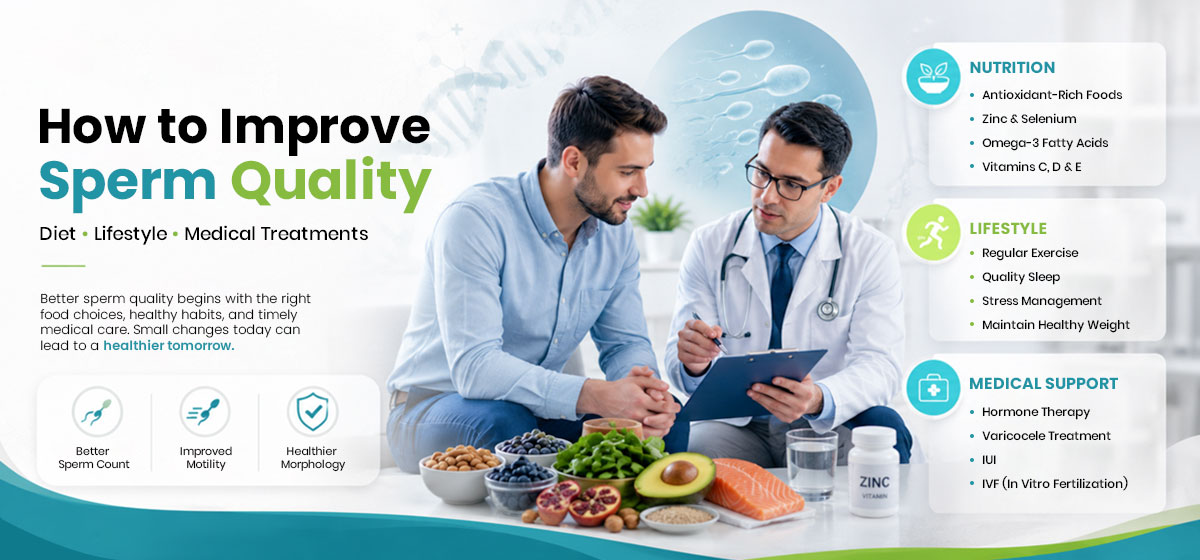
Sperm quality is not determined by a single factor. During a standard semen analysis at our clinic, embryologists evaluate three critical parameters to determine overall male reproductive health:
Sperm Count (Concentration): A healthy sperm count is generally considered to be 15 million sperm or more per milliliter of semen. A lower count is diagnosed as oligozoospermia.
Sperm Motility: This refers to the sperm's ability to swim forward effectively to reach and fertilize the egg. At least 40% of the sperm should be moving, with at least 32% showing progressive (forward) motility.
Sperm Morphology (Shape): Normal sperm have oval heads and long tails. Abnormal shapes hinder the sperm's ability to penetrate the egg. A healthy sample should have at least 4% normally shaped sperm.
One of the most common misconceptions about male fertility is that a weekend of healthy eating can fix a low sperm count.
In reality, the biological process of producing mature sperm known as spermatogenesis takes approximately 72 to 90 days. This means that the sperm you ejaculate today was created almost three months ago. Therefore, any positive lifestyle changes, dietary improvements, or medical interventions will take at least two to three months to reflect in a new semen analysis. Consistency is essential.
Creating a healthy environment for sperm production is the most effective way to improve quality naturally.
The testicles are located outside the body because sperm production requires a temperature slightly cooler than your core body temperature. Frequent exposure to high heat can severely impair sperm motility and count.
Avoid hot tubs, saunas, and excessively hot baths.
Do not work with a hot laptop resting directly on your lap.
Wear loose, breathable cotton underwear instead of tight synthetic fabrics.
Being overweight or obese directly impacts male fertility. Excess body fat increases the conversion of testosterone into estrogen, leading to a hormonal imbalance that reduces sperm production. Maintaining a Body Mass Index (BMI) between 18.5 and 24.9 can significantly improve both sperm count and morphology.
Smoking: Tobacco contains oxidative toxins that damage sperm DNA, lower sperm counts, and reduce motility. Quitting smoking is one of the fastest ways to halt further damage to your fertility.
Alcohol: Heavy drinking lowers testosterone levels and decreases sperm production. Limit alcohol consumption while trying to conceive.
Stress: Chronic psychological stress elevates cortisol levels, which can suppress the hormones needed to produce sperm. Incorporate stress-management techniques like regular exercise, meditation, or counseling.
Oxidative stress an imbalance of free radicals and antioxidants in the body is a leading cause of poor sperm quality and DNA fragmentation. A nutrient-rich diet can combat this.
| Key Nutrient | Benefit to Male Fertility | Food Sources |
| Antioxidants (Vitamin C & E) | Protects sperm DNA from free radical damage. | Oranges, berries, spinach, almonds, sunflower seeds. |
| Zinc | Crucial for sperm production, testosterone levels, and morphology. | Oysters, pumpkin seeds, lentils, lean beef. |
| Omega-3 Fatty Acids | Improves blood flow and sperm cell membrane health. | Salmon, walnuts, chia seeds, flaxseed. |
| Folic Acid (Folate) | Combined with zinc, it helps increase sperm concentration. | Leafy greens, asparagus, beans, fortified cereals. |
Sometimes, despite a pristine lifestyle, sperm quality remains too low for natural conception due to genetics, anatomical issues (like a varicocele), or past infections. When lifestyle changes are not enough, National IVF provides advanced Assisted Reproductive Technology (ART).
Intracytoplasmic Sperm Injection (ICSI):
If sperm count is extremely low, or if motility is severely compromised, conventional IVF may not work. ICSI is a highly advanced laboratory procedure where a single, healthy, motile sperm is carefully selected by our embryologists and injected directly into the center of the egg. This technique has revolutionized the treatment of severe male factor infertility, allowing men with very poor sperm parameters to father biological children.
As a general rule, couples should consult a fertility specialist if they have been actively trying to conceive through regular, unprotected intercourse for 12 months (or 6 months if the female partner is over 35).
However, men should seek an immediate evaluation if they have:
A history of testicular injury, surgery, or mumps after puberty.
Erectile dysfunction or difficulties with ejaculation.
Visible swelling, pain, or a lump in the testicular area.
At National IVF, Dr. Usha Karki and our dedicated embryology team provide discreet, compassionate, and precise diagnostic testing to uncover the root cause of your fertility challenges and build a roadmap to parenthood.
How can I improve my sperm motility quickly?
Because the sperm production cycle takes about 72 to 90 days, there is no overnight fix for sperm motility. To see improvements in about three months, you must consistently avoid heat exposure to the groin, quit smoking, maintain a healthy weight, and consume an antioxidant-rich diet.
Can tight underwear cause low sperm count?
Yes, consistently wearing tight underwear can trap heat against the scrotum, raising its temperature. Because sperm production requires a cooler environment than the rest of the body, prolonged heat exposure can reduce both sperm count and motility. Switching to loose, breathable cotton boxers is recommended.
Does masturbation decrease sperm count?
No, regular masturbation or ejaculation does not permanently decrease your overall sperm count or harm your fertility. However, if you are actively trying to conceive or preparing to provide a sample for IUI or IVF, most clinics recommend abstaining from ejaculation for 2 to 5 days to ensure the highest possible sperm concentration in the sample.
When is ICSI recommended for male infertility?
Intracytoplasmic Sperm Injection (ICSI) is highly recommended when a semen analysis shows severe male factor infertility. This includes an extremely low sperm count (oligozoospermia), very poor forward movement (asthenozoospermia), a high percentage of abnormally shaped sperm (teratozoospermia), or if sperm must be surgically extracted from the testicles.
News and Articles
When it comes to reproductive health and fertility care, choosing the right expert is the most crucial decision a couple...

Starting a family is a dream shared by many couples, but for some, the journey to parenthood is not always as simple as...

Introduction Infertility affects approximately 1 in 8 couples. If you are researching IVF cost, you likely know that pr...

