How to Improve Sperm Quality: Diet, Lifestyle & Medical Treatments
2 months ago, 18 minutes read
Poor sperm quality means one or more of the key measures of healthy sperm, count, motility, or shape, fall below what's considered typical for conception. It's more common than most men realize, and it doesn't automatically mean pregnancy is off the table. In many cases, sperm quality can improve with the right changes, and where it can't, treatment options exist to help.
We see this at National IVF Center on a regular basis. Men often come in after months of frustration, having already tried a handful of things they found online, without knowing which changes actually matter and which don't do much at all. Below is what genuinely affects sperm quality, what to eat and avoid, and when it makes sense to move from home changes to a formal fertility evaluation.
Sperm quality is a combined picture of three things: concentration (how many sperm are present per milliliter of semen), motility (how well they swim), and morphology (how normally they're shaped). A healthy sperm concentration generally falls at or above 15 million sperm per milliliter, according to World Health Organization reference values, with a total count of at least 39 million per ejaculate.
But concentration alone doesn't tell the whole story. You can have a technically "normal" count and still struggle to conceive if motility or morphology is poor, which is why a full semen analysis, not just a count, gives you the real picture of sperm quality.
Think of it less like a single test you pass or fail and more like a snapshot of your overall health at that moment. Sperm quality is sensitive to almost everything happening in your body, from what you eat to how much sleep you're getting to how stressed you've been at work.
Poor sperm quality usually comes from a mix of lifestyle factors, medical conditions, and sometimes things you can't control, like genetics. Here are the most common causes doctors see:
In a lot of cases, doctors find more than one contributing factor at once. That's exactly why a proper workup at a fertility clinic matters more than guessing at home.
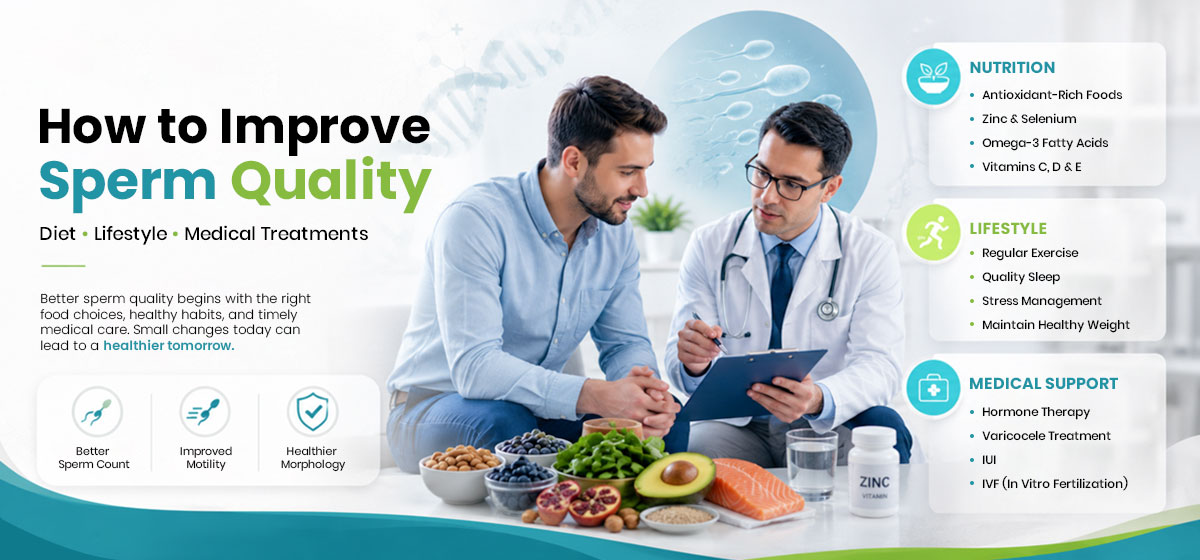
Sperm regenerates roughly every 74 days, which means the choices you make today can show measurable results within two to three months. Natural improvement comes down to consistent changes across diet, weight, sleep, stress, and avoiding the things that actively damage sperm quality. None of these changes work overnight, and none of them replace medical treatment if there's an underlying condition, but for a meaningful share of men, natural changes alone can move the needle.
Your diet directly shapes sperm quality because sperm cells are highly sensitive to oxidative stress, and food is where most of your antioxidant defense comes from. Aim for a plate that's mostly vegetables and fruit, with moderate whole grains and lean protein sources like fish, poultry, legumes, and eggs.
Carrying excess weight, particularly around the abdomen, is linked to lower testosterone and reduced sperm quality. Even a 5 to 10% reduction in body weight has been associated with measurable improvements in semen parameters for men who started out overweight or obese.
Moderate, regular exercise supports healthy testosterone levels, better blood flow, and lower body fat. Aim for 150 minutes of moderate activity per week. Overtraining, especially intense endurance training done daily, has been linked to reduced sperm quality in some studies, so balance is the goal.
Sleep is when your body regulates testosterone production, and chronic sleep deprivation is associated with lower testosterone and reduced sperm quality. Most men need 7 to 9 hours of sleep per night for hormone production to run properly.
Chronic stress raises cortisol, which interferes with the hormones that drive healthy sperm production, including testosterone and luteinizing hormone. Simple practices like daily walks, breathing exercises, or therapy can help break that cycle.
Smoking is one of the clearest, most consistent risk factors for reduced sperm quality, including lower count, motility, and morphology. Studies tracking former smokers show semen parameters improving within a few months of quitting, roughly matching the natural sperm regeneration cycle.
Heavy or regular alcohol use lowers testosterone and has a direct toxic effect on the testicles. Daily or heavy drinking consistently correlates with poorer sperm quality, while occasional moderate drinking hasn't shown the same clear negative impact.
Marijuana, cocaine, and anabolic steroids all interfere with sperm quality, sometimes severely. Anabolic steroids in particular can shut down natural testosterone production almost completely, and recovery afterward can take months or, in some cases, doesn't fully reverse.
Sperm production requires temperatures slightly below normal body temperature. Regular exposure to heat sources like hot tubs, saunas, and even keeping a laptop directly on your lap for long periods can measurably reduce sperm quality.
Pesticides, industrial chemicals, and heavy metals like lead have all been linked to reduced sperm quality in occupational and environmental studies. If your job involves regular exposure to chemicals, solvents, or radiation, that's worth discussing with a doctor directly.
Certain nutrients show up again and again in fertility research as supportive of healthy sperm quality:
On the flip side, a few foods are worth limiting:
Several supplements have research behind them for supporting sperm quality, though none work as a guaranteed fix on their own. CoQ10, vitamin D, vitamin E, zinc, selenium, and L-carnitine are the ones most commonly studied and recommended by fertility specialists.
More isn't always better here. High doses of certain antioxidants can actually backfire, and supplement quality varies widely between brands. It's worth getting your levels checked and talking to a doctor before starting anything, rather than taking a handful of pills based on internet advice alone.
When natural changes aren't enough, or when a semen analysis reveals a specific underlying condition, medical treatment becomes the more direct path forward. A fertility clinic can identify exactly what's driving your fertility problem and match you with the right fertility treatment rather than leaving you to guess.
| Treatment Type | Best For | What to Expect |
|---|---|---|
| Treating underlying conditions | Infections, hormonal disorders | Targeted medication or therapy addressing the root cause |
| Hormone therapy | Testosterone imbalances, pituitary issues | Medication to restore hormonal balance, monitored over months |
| Medications | Mild to moderate hormonal or production issues | Prescription drugs to stimulate healthy sperm production |
| Varicocele surgery | Enlarged scrotal veins | Outpatient procedure, recovery in 1 to 2 weeks |
| Assisted reproductive technologies (IVF, ICSI) | Severe male factor infertility | Lab-based fertilization techniques bypassing natural conception barriers |
If your poor sperm quality traces back to an infection, thyroid disorder, or another medical condition, treating that condition directly is usually the first step. In our experience, this is the category where results tend to be the most dramatic, since fixing the root cause often restores fertility without needing further intervention.
When bloodwork shows low testosterone, elevated prolactin, or other hormonal imbalances, targeted hormone therapy can help restore the signals your body needs for healthy sperm production. Most protocols take three to six months before you see meaningful changes on a follow-up semen analysis.
Certain medications, including clomiphene citrate and gonadotropins, are used off-label or specifically to stimulate sperm production in men with hormonal causes of infertility. These require monitoring through bloodwork and semen analysis as dosing is adjusted.
Varicocele repair is one of the more common surgical fertility treatments for men, typically an outpatient procedure with a recovery period of about one to two weeks. Results vary depending on the severity of the varicocele and how long it went untreated.
When sperm quality remains too low for natural conception even after treatment, options like IUI, IVF, and ICSI become the practical path forward. For men with extremely low or absent sperm counts, procedures like TESE, PESA, or TESA can retrieve sperm directly from the testicles for use in IVF.
Our fertility specialists provide semen analysis, hormone testing, and personalized treatment plans to identify exactly what's affecting your sperm quality and improve your chances of conceiving.
Book Your Free ConsultationBecause sperm takes about 74 days to fully develop and mature, most natural changes need at least two to three months before you'll see them reflected in a semen analysis. Medical treatments follow a similar or slightly longer timeline, often three to six months, since hormone therapy and medications also work within that same production cycle.
If you make changes and retest after three weeks, you're testing too early to see the real impact. Give it a full cycle, ideally closer to three months, before drawing conclusions about whether something is working.
See a specialist if any of the following apply:
A semen analysis is usually the starting point, and it's a simple, non-invasive test. From there, a fertility clinic can run additional hormone panels or imaging if the initial results point toward a specific cause.
National IVF, located centrally at Kantipath, Jamal, Kathmandu, evaluates hormonal, lifestyle, and structural factors together before recommending treatment, the same evidence-based approach that has made it one of the top fertility centers in Kathmandu for couples dealing with male fertility problems.
What sets this apart for male fertility cases specifically is that every stage of care sits under one roof. Semen analysis, hormone testing, and lifestyle counseling are handled in-house, and if a more advanced path is needed, so are varicocele repair, IUI, IVF, ICSI, and surgical sperm retrieval. Patients don't have to be referred elsewhere as their diagnosis or treatment plan develops; the same fertility care team follows the case from the first semen analysis through to pregnancy.
The clinic is led by Dr. Usha Karki, Clinical Director, whose close monitoring and evidence-based approach have earned National IVF a 5-star rating across its Google reviews, with patients specifically highlighting clear counseling and a calm, modern clinic environment. For men navigating poor sperm quality or unexplained infertility, having one experienced fertility specialist in Nepal oversee every stage is a meaningful part of why National IVF is regarded as one of the best fertility centers in Kathmandu to begin that evaluation.
A: Yes, for many men with mild to moderate issues linked to lifestyle factors, natural changes like better diet, weight loss, quitting smoking, and reducing heat exposure can meaningfully improve sperm quality within two to three months. If an underlying medical condition like a varicocele or hormonal imbalance is the cause, natural changes alone usually aren't enough.
A: Zinc-rich foods like oysters and pumpkin seeds, folate-rich leafy greens, fatty fish for omega-3s, and antioxidant-rich fruits are consistently linked to better sperm health in research. Walnuts specifically have shown measurable improvements in sperm motility and morphology.
A: Since sperm takes about 74 days to fully mature, most men need at least two to three months of consistent changes before seeing improvement on a follow-up semen analysis. Medical treatments like hormone therapy often follow a similar or slightly longer timeline.
A: Yes, chronic stress raises cortisol levels, which interferes with the hormones responsible for healthy sperm production, including testosterone. Men under prolonged stress often show this reflected in lower sperm quality and motility on semen analysis.
A: See a fertility specialist after 12 months of trying to conceive without success, or after 6 months if your partner is 35 or older. Go sooner if you have known risk factors like a varicocele, past testicular injury, or previous cancer treatment.
A: Yes, fertility clinics offer options ranging from hormone therapy and varicocele surgery to assisted reproductive technologies like IVF and ICSI, which can work even with severely reduced sperm quality. Sperm can sometimes be retrieved directly from the testicles through procedures like TESE for use in IVF.
A simple semen analysis will tell you more in one visit than months of guessing. Our fertility specialists can identify exactly what's affecting your sperm quality and recommend the right next step.
Schedule Your AppointmentFree, no-obligation consultation | Experienced fertility specialists
Medical Disclaimer: “This article is for general information and does not replace a personal medical evaluation. If you're experiencing poor sperm quality or difficulty conceiving, consult a fertility specialist for testing specific to your situation.”

Infertility is a deeply personal and often overwhelming challenge, affecting thousands of families across Nepal. As the...

Introduction Polycystic Ovary Syndrome (PCOS) is a complex hormonal condition that affects a significant percentage of...
How to Prepare Your Body for IVF: A 3-Month Pre-IVF Plan Updated: June 25, 20268 min read Key Takeaways The...

