IUI Procedure Step by Step: Follicle Monitoring, Trigger Timing, and Sperm Preparation
1 hour ago, 21 minutes read
An Intrauterine Insemination (IUI) procedure is a meticulously orchestrated medical process that extends far beyond the few minutes required to place prepared sperm into the uterus. A complete IUI treatment cycle is a comprehensive journey that includes detailed baseline fertility assessments, high-resolution ultrasound monitoring of follicle development, precise identification or pharmacological triggering of ovulation, specialized laboratory semen preparation, and the exact timing of the insemination itself.
The ultimate goal of this procedure is to ensure that a highly concentrated population of viable, motile sperm is placed deep within the female reproductive tract precisely when a mature egg is released. Because every patient’s reproductive biology is unique, the exact clinical protocol is never identical. Some individuals may undergo IUI during a completely natural, unmedicated menstrual cycle, while others will require targeted fertility medications to stimulate the ovaries.
At National IVF (National Centre for Reproductive Health Pvt. Ltd.) in Kathmandu, under the expert clinical direction of Dr. Usha Karki, we believe that understanding the science behind your treatment empowers you to make confident decisions. This comprehensive guide breaks down every single step of the IUI process, explaining the "why" and "how" behind follicle monitoring, trigger shots, and sperm washing.
Before diving into the step-by-step clinical process, it is essential to understand the biological hurdles IUI is designed to overcome. In a natural conception scenario, sperm deposited in the vagina must swim through the cervical canal, navigate the cervical mucus, travel up the entire length of the uterus, and finally enter the fallopian tubes to meet the egg.
This journey is fraught with biological obstacles:
Cervical Mucus Hostility: Sometimes, the mucus in the cervix is too thick or acidic, effectively acting as a barrier that traps or kills sperm before they can enter the uterus.
Low Sperm Motility: If sperm lack the energy or structural integrity to swim forward vigorously (progressive motility), they will not survive the long journey to the fallopian tubes.
Volume and Concentration: A low sperm count means fewer sperm have a statistical chance of reaching the final destination.
IUI directly bypasses the vaginal and cervical environments. By placing a concentrated, washed sample of highly motile sperm directly into the upper uterine cavity, the sperm are given a significant head start. They are deposited mere centimeters away from the entrance to the fallopian tubes, drastically increasing the concentration of sperm available for fertilization at the exact moment of ovulation.
Before initiating an IUI cycle, the fertility medical team at National IVF must conduct a thorough investigation to determine if the sperm and egg will have a biologically reasonable opportunity to meet post-insemination. IUI is not a blanket solution for all types of infertility.
Because IUI does not bypass the fallopian tubes (fertilization must still occur naturally deep inside the reproductive tract), structural verification is critical. Diagnostic imaging, such as a Hysterosalpingogram (HSG) or Saline Infusion Sonography (SIS), is performed to confirm that at least one fallopian tube is open, functional, and free from fluid blockages (hydrosalpinx) or severe pelvic adhesions. If both tubes are blocked, IUI will be physically impossible, and the patient will be advised to proceed directly to In Vitro Fertilization (IVF).
Blood tests evaluating Anti-Müllerian Hormone (AMH), Follicle-Stimulating Hormone (FSH), and Estradiol help Dr. Usha Karki determine the patient's baseline ovarian reserve. This informs the clinical team about how the ovaries are likely to respond to any fertility medications used during the cycle.
The male partner's semen analysis is a critical variable in this assessment. The laboratory evaluates sperm volume, concentration, progressive motility, and strict morphology. International clinical guidelines note that repeatedly low total motile sperm counts significantly reduce the statistical likelihood of IUI success. If the initial raw sperm parameters are profoundly compromised, too few motile sperm will remain available after the rigorous laboratory processing stage to achieve a reasonable probability of fertilization, and alternative treatments like ICSI may be recommended.
Once IUI is deemed clinically appropriate, the next decision is protocol design. Not every IUI cycle requires the administration of pharmacological fertility medications. The choice between a natural and stimulated cycle depends entirely on the underlying diagnosis.
In a natural-cycle IUI, clinical teams closely monitor the patient’s unmedicated menstrual cycle. Utilizing blood hormone levels (specifically detecting the natural LH surge) and ultrasound, the team identifies the exact physiological window surrounding spontaneous ovulation.
Best suited for: Younger patients with highly predictable menstrual cycles, couples dealing exclusively with isolated cervical factor infertility, or cases utilizing donor sperm without any underlying female infertility factors.
Advantages: Lower overall cost, zero risk of Ovarian Hyperstimulation Syndrome (OHSS), and a minimal risk of multiple pregnancies (twins or triplets).
A stimulated cycle utilizes oral medications (such as Letrozole or Clomiphene Citrate) or injectable medications (Gonadotropins) to directly influence ovarian follicle development. The goal is often "superovulation"—stimulating the ovaries to safely produce two to three mature eggs instead of just one, thereby increasing the statistical targets for the sperm.
Best suited for: Patients with ovulatory dysfunction (like PCOS), unexplained infertility, or mild age-related fertility decline.
Advantages: Higher success rates per cycle compared to natural IUI, as it corrects subtle ovulatory defects and ensures optimal timing.
Risks: Requires rigorous monitoring due to the increased risk of multiple pregnancies.
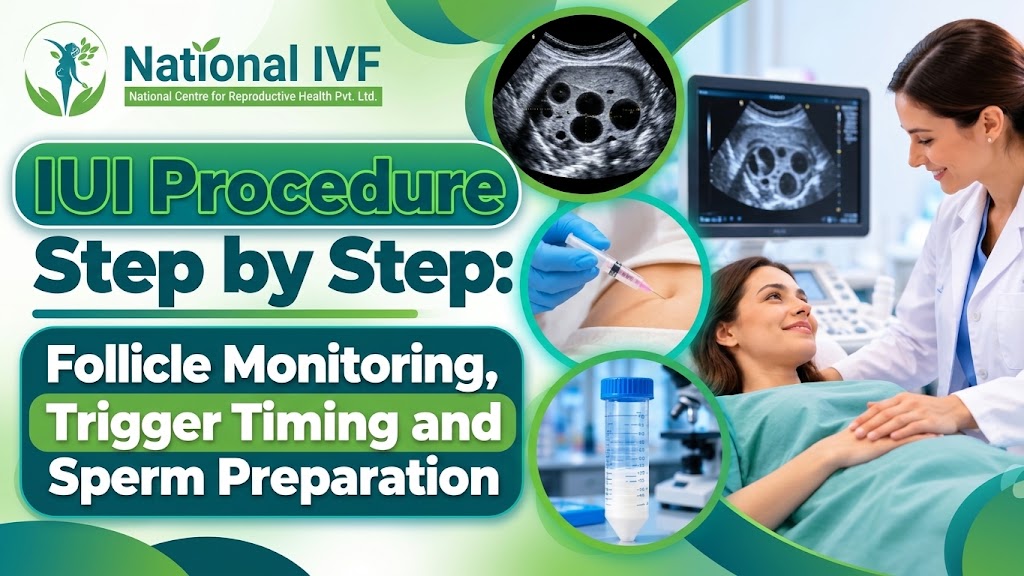
A follicle is a small, fluid-filled cystic structure located within the cortex of the ovary that houses and nourishes a single developing egg. Throughout the active phase of an IUI cycle, high-resolution transvaginal ultrasounds are heavily utilized to track the continuous development of these follicles and the thickening of the uterine lining (endometrium).
The clinical purpose of these frequent ultrasound appointments is not simply to record the physical dimensions of a follicle. Rigorous monitoring helps clinicians at National IVF definitively answer a series of highly complex biological questions:
Follicular Growth Rate: Are the follicles growing at the expected rate of 1.5 to 2 millimeters per day?
Endometrial Receptivity: Is the uterine lining thickening appropriately? A healthy, tri-laminar (three-layered) endometrium measuring between 7mm and 10mm is ideal for an embryo to implant. Some fertility medications, like Clomiphene, can occasionally thin the lining, requiring the protocol to be adjusted.
Preventing High-Order Multiples: Have too many mature follicles developed? If four or more dominant follicles emerge, the cycle may need to be abruptly cancelled, or converted to an IVF cycle, to prevent the severe medical risks associated with carrying triplets or quadruplets.
In the context of IUI, generating "more follicles" is not automatically a better clinical outcome; safety and precision are paramount.
The mechanical success of IUI relies entirely on placing the prepared, concentrated sperm into the uterine cavity in close temporal proximity to the exact moment of ovulation. The egg only survives for 12 to 24 hours after release, making this window incredibly narrow.
While natural cycles rely on detecting the body's spontaneous Luteinizing Hormone (LH) surge, stimulated protocols require precision control. The clinician will typically prescribe a specific injection Human Chorionic Gonadotropin (hCG), often known as the "trigger shot."
Because the molecular structure of hCG is nearly identical to LH, it perfectly mimics the body's natural ovulatory signal. When administered, it artificially coordinates the final maturation of the egg and forces the follicle to rupture and release the egg at a highly predictable time.
A frequent misunderstanding among patients is the belief that there is a single, universally correct number of hours that must elapse between the trigger injection and the insemination. Clinical evidence demonstrates that optimal timing is far more nuanced.
Current reproductive guidelines recommend that a single insemination can be effectively performed anywhere within a broad window of 24 to 36 hours relative to the hCG trigger injection. The treating clinic makes precise timing decisions calculated from their established internal protocols, the individual patient’s cycle history, and real-time follicle development metrics.
At National IVF, Dr. Usha Karki calculates this timeline to ensure that the sperm (which can survive for a few days in the reproductive tract) are washed, prepared, and waiting in the fallopian tubes precisely as the egg is released.
On the scheduled day of the IUI procedure, the male partner must provide a fresh semen sample. The logistics of this step are heavily regulated by the andrology laboratory to ensure maximum sample viability.
Abstinence Period: The male partner is generally required to observe a strict period of sexual abstinence for 2 to 5 days prior to the collection date. Ejaculating too soon before the procedure can result in a depleted sperm count, while abstaining for too long (over 7 days) can lead to an accumulation of dead or immotile sperm and higher DNA fragmentation.
Collection Environment: The sample is produced on-site at the fertility clinic in a dedicated, private collection room using a sterile, non-toxic container. Producing the sample at the clinic ensures that the semen is handed directly to the embryologist, preventing any temperature fluctuations or delays in processing that could degrade sperm motility.
Avoidance of Lubricants: Standard commercial lubricants, saliva, and even certain soaps can be highly toxic to sperm and must be strictly avoided during the collection process.
This is arguably the most critical technological step of the IUI process. Raw, unprocessed semen is never drawn directly into a syringe and placed into a patient's uterus.
Raw seminal fluid contains prostaglandins—hormone-like substances that, if injected directly into the uterus, cause severe, painful uterine cramping and contractions that would immediately expel the sperm. Furthermore, the raw ejaculate contains cellular debris, white blood cells (leukocytes), dead sperm, and bacteria that can trigger intense inflammatory and infectious responses.
The primary purpose of laboratory sperm preparation is to create a refined sperm suspension that is biologically suitable for deep intrauterine placement. The andrology laboratory at National IVF utilizes advanced techniques to isolate the highest quality sperm:
Liquefaction and Assessment: The raw sample is allowed to liquefy at body temperature in an incubator for about 30 minutes. An initial microscopic analysis assesses baseline count and motility.
Density Gradient Centrifugation: The semen is gently layered over a specialized, dense liquid medium in a test tube and placed in a centrifuge. As it spins, the centrifugal force pulls the healthy, highly motile, and structurally normal sperm down to the very bottom of the tube, forming a concentrated "pellet." Dead sperm, white blood cells, and seminal fluid remain trapped in the upper layers and are discarded.
The "Swim-Up" Technique (Optional): In some cases, a nutrient-rich culture media is placed over the concentrated pellet. Only the strongest, most energetic sperm can "swim up" into this top layer of media, ensuring that only elite sperm are selected for the procedure.
Capacitation: The washing process also strips away certain proteins from the sperm's outer membrane, mimicking the natural biological process of "capacitation" that normally occurs in the cervix, readying the sperm to penetrate the egg instantly.
The final result is a highly concentrated volume (usually around 0.5 milliliters) of elite, motile sperm suspended in a sterile, nutrient-rich media, ready for insemination.
Once the andrology laboratory has finalized the sperm preparation, the clinical insemination procedure itself is remarkably efficient and brief.
Preparation: The patient is positioned comfortably on an examination table, similar to a routine gynecological exam or Pap smear.
Visualization: The clinician gently inserts a sterile speculum into the vagina to clearly visualize the cervix. The cervix is carefully cleaned with a sterile solution to remove any natural mucus or bacteria.
Catheter Insertion: A very thin, soft, flexible, and sterile IUI catheter is attached to the syringe containing the prepared sperm. The clinician expertly guides this catheter through the tiny opening of the cervix (the cervical os) and advances it directly into the upper cavity of the uterus.
The Injection: The concentrated sperm sample is slowly and gently injected into the uterine cavity.
Completion: The catheter and the speculum are immediately removed. The patient is usually asked to remain lying down for 10 to 15 minutes before getting dressed.
The physical act of IUI insemination generally takes no more than 5 to 10 minutes. It is overwhelmingly described by patients as painless, requiring absolutely no anesthesia or pain medication. A small subset of patients may experience mild physical discomfort or short-lived, period-like cramping as the catheter navigates the cervix, but this resolves almost immediately.
Following the insemination, the patient enters what is universally known in the fertility community as the "Two-Week Wait" (TWW)—the luteal phase of the menstrual cycle leading up to the pregnancy test.
Depending on the specific medical protocol, Dr. Usha Karki may prescribe supplementary medications, typically Progesterone (administered via vaginal suppositories or oral tablets). Progesterone is the hormone responsible for maintaining a thick, receptive, and nutrient-rich uterine lining, creating the perfect environment for a fertilized embryo to successfully implant.
Patients are generally cleared to return to all normal daily activities, including work and light exercise, immediately following the procedure. It is completely normal to experience:
Mild spotting for 1 to 2 days (due to the catheter passing through the cervix).
Mild cramping or bloating.
Breast tenderness or fatigue (often a side effect of the Progesterone supplements).
The most critical subsequent milestone is the serum (blood) pregnancy test. Testing too early at home using urine strips can frequently create misleading and emotionally devastating false-positive results. This occurs because the hCG trigger shot used to induce ovulation can linger in the maternal bloodstream for up to 10 to 14 days.
Patients must strictly follow the exact testing date provided by the National IVF clinic—usually 14 days post-insemination—to ensure the hCG detected is genuinely from an implanted embryo and not residual medication.
While IUI is universally classified as a safe, minimally invasive fertility procedure, patients must understand that active medical management sometimes requires altering or halting a cycle.
A cycle may occasionally need to be cancelled prior to insemination for a variety of critical safety or clinical efficacy reasons:
Excessive Follicular Development: If ovarian stimulation medications cause more than three dominant follicles to mature, the cycle may be cancelled to protect maternal and fetal health from the extreme risks of high-order multiple pregnancies.
Poor Ovarian Response: If the ovaries fail to respond to the medication and no dominant follicles develop.
Premature Ovulation: If the LH surge occurs too early and the egg is released before the clinical team can schedule the insemination.
Suboptimal Semen Parameters: If the male partner is ill, severely stressed, or has been exposed to extreme heat, the post-wash motile sperm count on the day of the procedure may drop below the clinically viable threshold (typically below 2 to 5 million motile sperm).
The risks associated with IUI are generally tied to the fertility medications rather than the physical procedure itself. These include:
Multiple Gestations: Twins occur in roughly 8% to 15% of stimulated IUI cycles, carrying higher risks for premature labor and low birth weight.
Ovarian Hyperstimulation Syndrome (OHSS): A condition where the ovaries become swollen and painful, though severe OHSS is exceptionally rare in IUI cycles compared to IVF.
If the pregnancy test yields a negative result, it is completely normal to experience profound disappointment. However, a negative result does not dictate that the journey is over, nor does it mean another identical cycle should commence blindly.
At National IVF, a failed cycle provides critical diagnostic data. Dr. Usha Karki will conduct a thorough review analyzing the patient's specific ovarian response, the synchronization of the trigger and insemination, and the final post-processing laboratory findings.
For patients diagnosed with unexplained infertility, clinical guidelines generally recommend a strictly limited course of IUI therapy—typically encompassing three to four well-timed, stimulated cycles. Statistics show that the vast majority of successful IUI pregnancies occur within the first three attempts. If treatment remains entirely unsuccessful after this limited course, continuing to repeat IUI yields a dramatically diminished point of return, and the clinical recommendation will generally shift toward In Vitro Fertilization (IVF).
An IUI cycle requires more than just clinical execution; it requires an ethical, diagnostic-first approach to ensure you are receiving the right treatment at the right time.
At National IVF, located centrally in Jyoti Bhawan, Kathmandu, our clinical framework is defined by precision and transparency. Under the leadership of Dr. Usha Karki a highly respected Consultant in Reproductive Medicine we offer an advanced andrology laboratory capable of executing complex sperm capacitation and density gradient washing, ensuring that only the highest quality gametes are utilized for your procedure. We prioritize your safety by actively monitoring follicular development to eliminate the risks of dangerous multiple pregnancies, offering a level of bespoke care that generic, unmonitored cycles simply cannot match.
How long does the entire IUI process take?
From the first baseline ultrasound on Day 2 of your menstrual cycle to the actual insemination procedure, the active medical phase takes approximately two weeks. You then enter a two-week waiting period before taking a pregnancy test. Therefore, one complete cycle takes about four weeks.
Can the sperm fall out after the IUI procedure?
No. Once the washed, concentrated sperm is injected directly into the uterine cavity, it cannot "fall out" when you stand up. The uterus is a muscular, collapsed space (like an uninflated balloon) that holds the fluid securely. Any wetness felt after the procedure is merely cervical mucus or the sterile fluid used to clean the cervix.
Is bed rest required after an IUI?
Strict bed rest is not medically required. While you will rest for 10 to 15 minutes on the examination table immediately following the insemination, you can safely resume your normal daily routine, including walking, driving, and working, right afterward. Strenuous, high-impact exercise should be avoided during the two-week wait.
How many motile sperm are needed for a successful IUI?
While success has been reported with lower numbers, clinical guidelines generally prefer a post-wash total motile sperm count (TMSC) of at least 5 to 10 million. If the post-wash count drops significantly below 2 million, the statistical probability of pregnancy drops sharply, and IVF with ICSI is usually recommended.
Can I have intercourse after an IUI procedure?
Yes. In fact, many fertility specialists encourage couples to have natural intercourse 12 to 24 hours after the IUI procedure. This can provide a secondary wave of sperm and may induce subtle uterine contractions that actually help propel the clinically placed sperm closer to the fallopian tubes.
News and Articles
Infertility is a deeply personal and often overwhelming challenge, affecting thousands of families across Nepal. As the...

Introduction Hormones play a crucial role in the health and well-being of women at every stage of life. From regulating...

Introduction Polycystic Ovary Syndrome (PCOS) is a complex hormonal condition that affects a significant percentage of...

