Key Takeaways
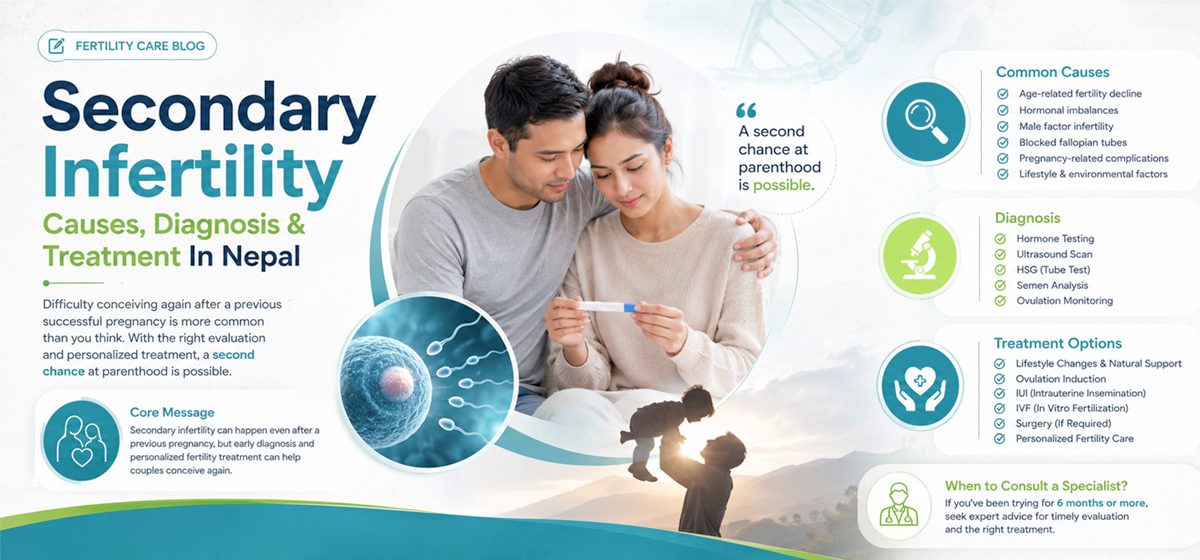
- Secondary infertility means difficulty conceiving or carrying a pregnancy after a prior successful pregnancy, with no contraception in use.
- Common causes include age-related egg quality decline, delivery-related scarring, hormonal disorders, and male factor issues.
- A full diagnostic workup for both partners typically takes 2 to 4 weeks and includes hormone panels, ultrasound, and semen analysis.
- Treatment ranges from ovulation medication to IUI and IVF, chosen based on the specific cause identified during testing.
Secondary infertility is the inability to conceive or carry a pregnancy to term after you've already had at least one successful pregnancy, with no contraception in use. It's more common than most people realize, and it doesn't mean something is fundamentally wrong. This comprehensive guide covers everything you need to know: the underlying causes, how doctors diagnose it, what treatment actually looks like, and when it's time to seek help.
What Is Secondary Infertility?
Secondary infertility is defined as the failure to conceive or sustain a pregnancy after a previous live birth, despite regular, unprotected intercourse for 12 months or more. It's distinct from primary infertility, which describes couples who have never conceived at all.
Emotionally, secondary infertility can feel isolating in its own way. Family members assume that because you've done it before, you can do it again, and friends may not realize you're struggling at all since you already have a child. In our clinical experience, many couples wait far longer than they should before seeking help, simply because the diagnosis doesn't fit their expectations of what infertility looks like.
Causes of Secondary Infertility
Age-Related Fertility Decline
Egg quality and quantity decline with age, and this decline speeds up after the mid-30s. If a few years have passed since your last pregnancy, your fertility window may simply be narrower now than it was then. This is one of the most common and most overlooked causes.
Complications from a Previous Pregnancy or Delivery
Scar tissue from a C-section, retained placental tissue, or an infection after delivery can all affect the uterus or fallopian tubes. Even a straightforward vaginal delivery can sometimes lead to pelvic adhesions that interfere with conception later.
Hormonal and Ovulation Disorders
Conditions like polycystic ovary syndrome (PCOS) or thyroid imbalances can develop or worsen after a pregnancy. These disrupt ovulation, which means your body may not be releasing an egg regularly, even if your cycles seem normal on the surface.
Male Factor Causes
Fertility isn't only a woman's issue. Sperm count, motility, and shape can decline over time due to age, weight changes, stress, medications, or conditions like varicocele. A male factor contributes to a substantial share of infertility cases overall, either alone or alongside a female factor, which is why both partners should be evaluated together.
Tubal Blockage or Pelvic Scarring
Untreated infections, endometriosis, or scar tissue from previous surgeries can block the fallopian tubes. If sperm can't reach the egg, or a fertilized egg can't travel to the uterus, pregnancy won't happen naturally.
Lifestyle and Weight Changes
Significant weight gain or loss since your last pregnancy, new smoking or drinking habits, or increased stress levels can all shift your fertility, sometimes more than people expect. In a lot of cases, doctors find more than one contributing factor at once, which is exactly why a proper workup at a fertility clinic matters more than guessing at home.
How Secondary Infertility Is Diagnosed
Diagnosis is a structured process, not a single test. Your first appointment focuses on history, including your previous pregnancy and delivery, menstrual cycle pattern, past surgeries, medications, and lifestyle factors. Both partners should be evaluated, since secondary infertility can originate from either side.
Tests for Women
A hormone panel (FSH, LH, AMH, TSH) checks ovarian reserve, thyroid function, and ovulation signals, with results back in 3 to 7 days. A transvaginal ultrasound checks uterine shape, fibroids, and follicle count, usually with same-day results. A hysterosalpingogram (HSG) checks for tubal blockage and uterine cavity shape through a 30-minute procedure.
Tests for Men
A semen analysis checks sperm count, motility, and shape. It's a simple, non-invasive test, usually with results back within a few days. If results are abnormal, a repeat test is often recommended before drawing conclusions, since sperm quality can fluctuate.
Altogether, a full diagnostic workup for both partners typically takes 2 to 4 weeks, depending on how your cycle lines up with testing.
Not Sure What's Behind the Delay?
Our fertility specialists provide hormone testing, imaging, and semen analysis to identify exactly what's affecting your ability to conceive again, and build a personalized treatment plan from there.
Book Your Free ConsultationTreatment Options for Secondary Infertility
Treatment depends entirely on what the diagnosis reveals. A good reproductive specialist anchors your treatment plan to your specific test results rather than a generic protocol.
Lifestyle and Medical Management
If the cause is a treatable hormonal imbalance, like thyroid dysfunction, medication alone can sometimes restore fertility within a few months. Weight management and reducing alcohol or smoking also make a measurable difference for some couples.
Ovulation Induction
For women who aren't ovulating regularly, medications like letrozole or clomiphene can stimulate egg release. This is usually the first line of treatment when ovulation is the main issue, monitored closely with ultrasound and bloodwork.
IUI (Intrauterine Insemination)
If ovulation is fine but there's a mild male factor issue or unexplained infertility, IUI places prepared sperm directly into the uterus around the time of ovulation. It's less invasive and less costly than IVF, and it's often tried for 3 to 4 cycles before moving on to other options.
IVF and Advanced Fertility Treatments
When tubal blockage, significant male factor infertility, or lower ovarian reserve are involved, IVF is often the most effective route. Eggs are retrieved, fertilized in a lab, and a resulting embryo is transferred back into the uterus. Success rates vary significantly by age and underlying cause, so ask your specialist for numbers specific to your situation.
Surgical Options
Blocked tubes, fibroids, or significant scar tissue sometimes need to be corrected surgically before other treatments can work. This is usually a targeted, minimally invasive procedure rather than major surgery.
When Should You See a Fertility Specialist?
If you're under 35, most doctors recommend seeing a specialist after 12 months of trying without success. If you're 35 or older, that window shortens to 6 months. See a specialist sooner if you have irregular or absent periods, a history of pelvic infections or surgery, known thyroid issues, or if your partner has a known fertility concern.
Common Myths and Misconceptions
"If it happened once, it'll happen again." Fertility isn't static. Your body, hormones, and circumstances change over time, sometimes significantly, even within a few years.
"It's always the woman's fault." Male factor infertility contributes to a substantial share of cases. Both partners should be evaluated.
"Stress is the main cause." Stress can affect your cycle, but it's rarely the sole cause of secondary infertility. Treating stress alone without investigating physical causes often delays real answers.
How National IVF Center Approaches This
National IVF, located centrally at Kantipath, Jamal, Kathmandu, evaluates hormonal, structural, and lifestyle factors together for both partners before recommending treatment, the same evidence-based approach that has made it one of the top fertility centers in Kathmandu for couples dealing with secondary infertility.
What sets this apart is that every stage of care sits under one roof. Hormone testing, ultrasound, and semen analysis are handled in-house, and if a more advanced path is needed, so are IUI, IVF, and surgical correction. Patients don't have to be referred elsewhere as their diagnosis or treatment plan develops; the same fertility care team follows the case from the first consultation through to pregnancy.
The clinic is led by Dr. Usha Karki, Clinical Director, whose close monitoring and evidence-based approach have earned National IVF a 5-star rating across its Google reviews, with patients specifically highlighting clear counseling and a calm, modern clinic environment.
Frequently Asked Questions
Q: Can secondary infertility be reversed naturally without treatment?
A: Sometimes, if the cause is related to weight, stress, or a mild hormonal shift, lifestyle changes alone can help. But if the cause is structural or age-related, natural methods usually aren't enough on their own.
Q: Is secondary infertility more common than primary infertility?
A: Rates vary by population, but secondary infertility affects a significant portion of couples trying for another child. It's common enough that you're far from alone.
Q: At what age does secondary infertility increase the risk?
A: Risk starts increasing gradually after age 30 and more noticeably after 35, mainly due to declining egg quantity and quality.
Q: How long should we try before getting tested for secondary infertility?
A: Generally 12 months if you're under 35, or 6 months if you're 35 or older. See a doctor sooner if you notice irregular cycles or have a relevant medical history.
Q: Does a previous C-section cause secondary infertility?
A: It can, in some cases, be due to scar tissue affecting the uterus or nearby structures, though most women who've had a C-section conceive again without issues.
Q: Is IVF the only treatment option for secondary infertility?
A: No. Many couples respond well to simpler treatments like ovulation medication or IUI, depending on the cause. IVF is typically recommended when other options aren't likely to work.
Take the First Step Toward Answers
National IVF provides comprehensive diagnostic and treatment guidance for secondary infertility. Schedule your consultation to get real answers instead of more months of uncertainty.
Schedule Your AppointmentFree, no-obligation consultation | Board-certified specialists