IUI Success Rates by Age: An Evidence-Based Guide to Setting Realistic Fertility Expectations
1 hour ago, 23 minutes read
When you begin researching fertility treatments, one of the first questions you will likely ask is, "What is my chance of success?" If you are considering Intrauterine Insemination (IUI), you will quickly find that age is repeatedly cited as the most critical factor in your prognosis.
It is absolutely true that age matters in IUI treatment, but a person’s age alone cannot tell them definitively whether IUI will work. While the statistical chance of pregnancy and live birth declines as the age of the female partner increases, IUI success also heavily depends on why pregnancy has not occurred, whether the fallopian tubes are functional, the quality of the male partner's sperm, the specific medication protocol used, and your previous treatment history.
This complex web of biological variables is why two 35-year-old women can have drastically different chances of success with the exact same procedure. It is also why any website or clinic presenting a single, universally high percentage as "your IUI success rate" without explaining the population studied, the treatment protocol, and the specific medical outcome being measured should be interpreted with extreme caution.
At National IVF (National Centre for Reproductive Health Pvt. Ltd.) in Kathmandu, under the clinical leadership of Dr. Usha Karki, we believe that ethical fertility care begins with transparent, individualized data. This comprehensive guide breaks down exactly how age impacts IUI success, what those confusing percentages actually mean, and how to know when it is time to move on to IVF.
Yes. Female age is universally recognized by reproductive endocrinologists as the single most important predictor of natural fecundity (the ability to achieve a pregnancy within a single menstrual cycle).
The American Society for Reproductive Medicine (ASRM) states that female age is the most critical predictor of fertility, while the American College of Obstetricians and Gynecologists (ACOG) explains that fertility declines gradually from the early 30s and drops much more rapidly during the mid-to-late 30s and early 40s.
This exact same biological pattern appears in IUI clinical studies. Because IUI relies heavily on the body's natural fertilization processes, it is bound by the same biological limitations as natural conception. However, there is no scientifically responsible, universal table that can tell you, "At age 34 your chance is exactly X%, and at age 38 it is exactly Y%." The actual probability of taking home a baby depends entirely on who was included in the data and how the clinic defines "success."
Before you compare percentages between different clinics in Nepal or abroad, you must ask one vital question: What outcome is actually being measured?
When a clinic claims a "20% IUI success rate," they are rarely giving you the full picture. A medical study or a clinic's marketing brochure may report entirely different endpoints:
| Terminology | What It Actually Means in Fertility Data |
| Positive Pregnancy Test (Biochemical) | The patient had a positive blood or urine test (hCG) indicating early implantation, but this does not account for early chemical pregnancies that fail to progress. |
| Clinical Pregnancy Rate | A pregnancy confirmed clinically by an ultrasound showing a gestational sac and a fetal heartbeat (usually around 6 to 7 weeks). |
| Live-Birth Rate | The treatment resulted in the successful delivery of a living baby. This is the most conservative percentage, but the most meaningful for patients. |
| Per-Cycle Rate | The probability of achieving the outcome from one single IUI treatment attempt. |
| Cumulative Rate | The overall chance of success observed after a patient undergoes several sequential IUI attempts (e.g., the chance of success after 3 full cycles). |
These numbers should never be treated as interchangeable. For patients, the live-birth rate is usually the most clinically meaningful endpoint, but many publications and clinic websites report "pregnancy rates" because that number is inherently higher and looks better for marketing.
At National IVF, we prioritize discussing your expected live-birth rate based on your specific age and diagnosis.
To understand how age impacts IUI, we must look at large-scale, peer-reviewed clinical data.
One landmark study examining more than 4,100 IUI cycles (using Clomiphene Citrate for ovarian stimulation) reported clinical pregnancy rates per initiated cycle that declined progressively as maternal age increased. The approximate breakdown in this specific population was:
Under 35: ~10% to 12% per cycle
Ages 35–37: ~8% to 9% per cycle
Ages 38–40: ~6% to 7% per cycle
Ages 41–42: ~3% to 4% per cycle
Over 42: Less than 1% per cycle
Note: These numbers come from one particular patient population and treatment protocol. They are historical clinical benchmarks and should not be interpreted as a guaranteed personal forecast.
More recent, highly comprehensive data continues to show this exact overall age relationship. A large 2024 clinical cohort involving over 10,000 insemination cycles found that cumulative live-birth rates declined significantly and predictably with increasing maternal age, regardless of whether partner sperm or donor sperm was used.
For women aged 40 and older, a systematic review of 42 different global studies found that live-birth rates per IUI cycle using partner sperm ranged from 0% to 8.5%, with the vast majority of clinics reporting success rates of 4% or less per cycle.
The most useful conclusion for patients is not that everyone in an age band has one fixed, unchangeable probability. Rather, the conclusion is this: Increasing age fundamentally changes the statistical value of spending another reproductive cycle on IUI, making treatment reassessment and the pivot to IVF increasingly critical as you get older.
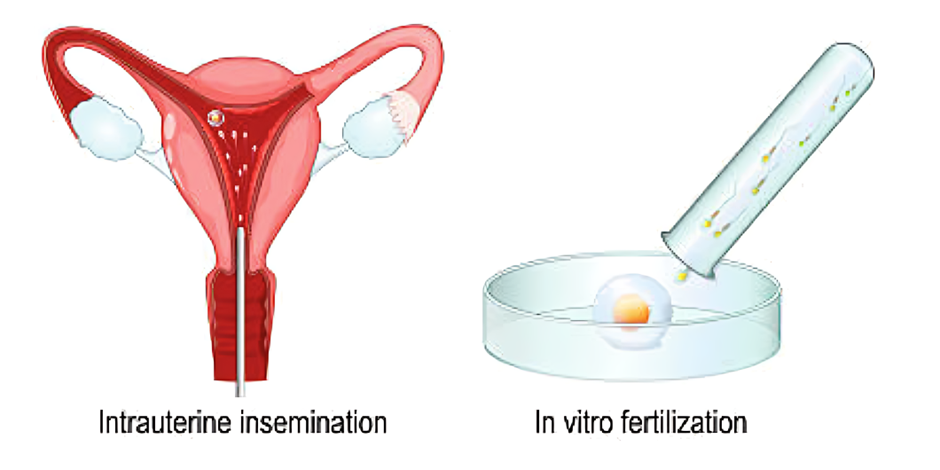
To understand the data, you must understand the biology. IUI is a fantastic tool for changing the placement of sperm, bypassing the cervix, and ensuring optimal timing. When combined with medications, it can also support and strengthen ovulation. However, IUI does not and cannot reverse biological changes inside the eggs.
With increasing reproductive age, several unchangeable biological shifts occur:
A woman is born with all the eggs she will ever have. Over time, this reserve naturally depletes. By the time a woman reaches her mid-30s, the number of eggs remaining in the ovaries drops significantly. While IUI only requires one or two good eggs to work, a lower overall reserve often means the ovaries are less responsive to the mild stimulation medications used in IUI cycles.
This is the most critical factor. "Egg quality" refers to whether an egg is genetically normal (euploid) or genetically abnormal (aneuploid). As women age, the machinery inside the eggs that divides DNA becomes less efficient.
In a woman's 20s, the vast majority of her eggs are chromosomally normal.
By age 40, a high percentage of the remaining eggs carry chromosomal abnormalities.
If an abnormal egg is fertilized by a sperm during an IUI cycle, it will either fail to implant in the uterus, or it will result in an early miscarriage.
Because the rate of chromosomal abnormalities rises with age, the risk of miscarriage also rises concurrently. ACOG notes that both egg quantity and egg quality decline with age, driving an age-related decline in overall live-birth probabilities across all natural and basic fertility treatments.
Patients sometimes imagine that seeing a fertility specialist means the treatment will fix the egg. In IUI, fertilization still needs to occur naturally inside the dark environment of the fallopian tube. The specialist cannot see the egg, cannot evaluate its chromosomal health, and cannot force the sperm to penetrate it. If the egg is of poor quality due to age, simply placing washed sperm closer to it will not create a healthy pregnancy.
While age dictates the quality of the egg, IUI will absolutely fail regardless of how young the female partner is—if other structural or biological factors are impaired.
IUI is not equally useful for every diagnosis. For couples diagnosed specifically with unexplained infertility, the ASRM recommends ovarian stimulation with oral medication (like Letrozole) plus IUI as an excellent initial treatment strategy.
However, if the diagnosis is severe endometriosis, which creates toxic inflammatory fluids in the pelvis that damage eggs and sperm, IUI has a drastically reduced success rate. The specific diagnosis matters just as much as the patient's birth date.
IUI absolutely does not bypass blocked fallopian tubes. Prepared sperm is placed inside the uterus, but fertilization still generally needs to occur in the outer third of a fallopian tube. For this reason, a rigorous assessment of the reproductive tract is mandatory before initiating IUI.
The ASRM includes tubal evaluation within a standard infertility work-up, recommending procedures like a Hysterosalpingogram (HSG) or Saline Infusion Sonography (SIS). If both tubes are blocked by scar tissue or past infections, repeatedly placing sperm into the uterus is futile. You must move directly to IVF, which bypasses the tubes entirely.
IUI success depends heavily on having enough usable, highly motile sperm available after laboratory processing (sperm washing).
The joint AUA/ASRM male-infertility guideline states that couples dealing with repeatedly low total motile sperm counts should be explicitly counseled that IUI success rates will be severely reduced. Clinical data specifically notes that pregnancy chances drop sharply when fewer than 5 million motile sperm remain after laboratory processing. If severe male-factor infertility is present, Intracytoplasmic Sperm Injection (ICSI) combined with IVF is the medically appropriate path.
The specific medical protocol chosen by your doctor affects both pregnancy probability and risk. Some IUI cycles are performed during a completely natural, unmedicated cycle. Others use medication to stimulate follicular development.
For unexplained infertility, ASRM finds that utilizing ovarian stimulation is statistically more effective than natural-cycle IUI. However, this stimulation requires rigorous ultrasound monitoring because developing multiple mature follicles significantly increases the dangerous risk of high-order multiple pregnancies (twins or triplets). More medication does not automatically mean a better treatment plan; precision and safety are paramount.
Patients frequently assume: "My AMH blood test came back high, so my IUI success rate must be high regardless of my age."
AMH (Anti-Müllerian Hormone) does not work that way. Ovarian reserve testing helps fertility specialists estimate how many eggs remain and how the ovaries will respond to stimulation medications. However, the ASRM explicitly states that AMH primarily provides information about egg quantity. It is not a direct measurement of egg quality and cannot guarantee a pregnancy. A 42-year-old with a high AMH still faces the egg quality challenges of a 42-year-old.
A failed first IUI does not automatically mean IUI cannot work for you. At the same time, repeating the treatment indefinitely is not evidence-based medicine.
For selected patients, ASRM’s commonly recommended sequence is approximately three or four well-timed cycles of IUI. Statistically, the vast majority of couples who will achieve a pregnancy with IUI will do so within the first three to four attempts. If pregnancy has not occurred by cycle four, the statistical chance of success in cycle five drops to near zero. At that point, the biological evidence suggests moving to IVF.
To help you understand how fertility specialists weigh these factors, here is a general breakdown of how age influences the strategic approach to IUI.
In this age bracket, a high percentage of eggs are chromosomally normal. If a patient under 35 has open fallopian tubes, good ovarian reserve, and a partner with a normal semen analysis (or is using donor sperm), IUI is an incredibly efficient, cost-effective, and logical first step. A full course of three to four stimulated IUI cycles is highly appropriate before considering IVF.
Fertility decline accelerates in this window, but IUI remains a highly viable starting option. The success rates per cycle hover around 8% to 10%. Patients in this bracket should ensure they undergo comprehensive baseline testing (HSG and Semen Analysis) immediately to ensure they do not waste precious time on IUI if structural barriers exist. A course of three IUI cycles is generally recommended before pivoting to IVF.
At age 38, the biological clock becomes a primary clinical consideration. Egg quality declines more steeply, meaning miscarriage rates rise. While pregnancy through IUI is absolutely still possible, the per-cycle success rate drops to around 5% to 7%.
For unexplained infertility specifically, the ASRM reports strong clinical evidence that moving to immediate IVF in women aged 38 and older often provides a much higher pregnancy rate and a shorter time-to-pregnancy than a strategy involving multiple rounds of IUI. An individualized discussion with Dr. Usha Karki is critical here to balance your desire for less invasive treatment against the reality of a shrinking reproductive window.
Pregnancy through IUI after age 40 is medically possible, but expectations must be managed carefully. Studies show that partner-sperm IUI live-birth rates in this age group are generally 4% or less per cycle.
The ASRM explicitly advises that women older than 40 warrant more immediate, advanced fertility evaluations and should strongly consider moving directly to IVF. The clinical question at this stage is rarely, "Can IUI ever work?" Instead, the vital question is, "Is spending a month on a 3% chance with IUI the best use of my remaining reproductive time, or should we invest in IVF where success rates are higher?"
Patients frequently ask for the specific "IUI success rate in Nepal." The reality is that there is currently not enough verified, centralized national outcome data to responsibly state that Nepal has one universal IUI success rate.
One peer-reviewed study published in Nepal in 2023 reviewed 225 women receiving IUI at a fertility center in the Kathmandu Valley. Pregnancy occurred in 23 women, equating to a 10.22% pregnancy rate in that specific study population. Notably, the mean age among those who successfully became pregnant was approximately 29 years old.
While this study provides valuable local clinical evidence, it must not be interpreted as a guaranteed national benchmark, a live-birth rate, or National IVF’s specific success rate.
If you see a fertility clinic in Kathmandu promising a "50% IUI success rate," you should immediately ask the following clarifying questions:
Is this percentage for a positive pregnancy test or a live birth?
Is this per single cycle or a cumulative rate after many cycles?
Which age group does this statistic represent?
Does this data include young patients using highly screened donor sperm?
Asking these questions makes the statistics far more meaningful and protects you from misleading marketing.
IUI should be formally reconsidered when the expected statistical benefit of undergoing another cycle becomes too low relative to the emotional burden, the financial cost, and the precious time involved.
Dr. Usha Karki may recommend an earlier review and a pivot to IVF under the following circumstances:
You have completed three or four properly monitored, well-timed IUI cycles without achieving a pregnancy.
You have increasing maternal age (specifically approaching or over 38) and need to shorten the time to pregnancy.
Your ovaries show a poor response to stimulation medications.
Diagnostic testing reveals significant tubal disease or severe pelvic scarring.
The male partner has severe sperm abnormalities (low count, poor morphology, or very low motility).
You require genetic testing of embryos (PGT-A) to prevent passing on a known hereditary condition or to mitigate age-related miscarriage risks.
If you have experienced a failed IUI cycle, do not blindly rush into a second or third attempt without a clinical debrief. Before repeating treatment, ask your fertility specialist these 10 empowering questions:
What is the most likely biological reason the previous cycle did not succeed?
Has our underlying diagnosis or prognosis changed based on how my body responded last month?
Was my ovarian response to the medication optimal?
Were the number and the physical maturity of the follicles appropriate on the day of the trigger shot?
What was the total motile sperm count (TMSC) after laboratory processing on the day of the procedure?
Are we absolutely certain that my fallopian tubes are open and functional?
Has my age materially changed the expected statistical benefit of trying another IUI?
What is our expected live-birth probability from another IUI compared to moving to IVF?
At what specific point (after how many cycles) would you clinically recommend changing our strategy to IVF?
When we discuss my "chances," are we measuring success as a clinical pregnancy or a live birth?
These questions transform a passive "let's try again" approach into a highly informed, strategic medical decision.
At National IVF, located in Jyoti Bhawan, Kantipath, Kathmandu, we offer a comprehensive suite of fertility services, including intrauterine insemination, advanced ovulation induction, follicular monitoring, semen analysis, ovarian reserve testing, and state-of-the-art IVF and ICSI.
For patients considering IUI, the most useful starting point is not picking a treatment based on an age chart found online. The correct starting point is a detailed, empathetic consultation with Dr. Usha Karki to determine exactly why pregnancy has not occurred, whether IUI is biologically appropriate for your specific anatomy, and what factors improve or reduce your prognosis.
If you already have fertility test results, HSG films, or medical records from previous IUI attempts at other clinics, please bring them to your initial consultation. Our clinical team will assess your complete history to build a customized treatment roadmap, rather than estimating your chances based on your age alone.
What is considered a "good" IUI success rate?
There is no single percentage that defines a universally "good" IUI result. It depends entirely on the patient’s age, underlying diagnosis, sperm source, and whether the clinic is reporting a positive pregnancy test or a live birth. For a healthy woman under 35 with unexplained infertility, a 10% to 15% per-cycle success rate is considered clinically excellent.
Is IUI more successful on the second or third attempt?
The cumulative chance of pregnancy increases across repeated cycles because each attempt creates another mathematical opportunity. However, the biological chance of success in an individual cycle does not increase merely because it is the second or third attempt. If the underlying barrier hasn't changed, the per-cycle odds remain relatively static.
Does IUI work better with fertility medicine?
For couples with unexplained infertility, clinical guidelines indicate that ovarian stimulation using oral agents (like Letrozole) combined with IUI is more effective than unmedicated, natural-cycle IUI. However, medication introduces risks, specifically the possibility of multiple follicle development, meaning the cycle must be rigorously monitored with ultrasound.
Does a high AMH level mean my IUI will definitely work?
No. AMH (Anti-Müllerian Hormone) helps specialists assess your overall ovarian reserve (egg quantity) and predict your potential response to stimulation medications. It does not directly measure egg quality or chromosomal health, and therefore cannot guarantee a pregnancy.
Can IUI work if my partner has a low sperm count?
It can, but it depends on the severity of the deficit and the number of highly motile sperm available after laboratory washing. If the post-processing total motile sperm count is persistently below approximately 5 million, IUI pregnancy rates are severely reduced, and IVF with ICSI is usually the recommended clinical path.
Does one failed IUI mean I immediately need IVF?
No. A single unsuccessful cycle does not determine your ultimate fertility fate. The decision to move to IVF depends on a holistic review of your age, diagnosis, ovarian response, tubal status, and previous fertility history. Most specialists recommend a course of 3 to 4 IUI attempts for younger patients before pivoting to IVF.
At what age should a woman skip IUI entirely?
There is no strict, universal age cutoff at which every single patient must skip IUI. However, the expected clinical benefit of IUI declines substantially after age 38, and drops drastically after age 40. Current reproductive evidence strongly supports an earlier discussion of IVF for women in their late 30s and 40s when reproductive time is critically limited.
Make Your Fertility Journey Count
Understanding your true chances of success is the most empowering step you can take on your fertility journey. At National IVF, we prioritize medical truth, advanced diagnostics, and compassionate care over empty promises.
Book Your Comprehensive Fertility Assessment with Dr. Usha Karki Today
News and Articles
When navigating the complex journey of infertility, understanding the IVF success rates in Nepal is generally the first...
When researching fertility treatments, many couples naturally ask, "What is the IUI cost in Nepal?" However, the final p...

Selecting the best IVF center in Nepal is one of the most critical decisions an aspiring parent will make. In reproducti...

