IUI Cost in Nepal
1 hour ago, 10 minutes read
When researching fertility treatments, many couples naturally ask, "What is the IUI cost in Nepal?" However, the final price depends on much more than the 10-minute insemination procedure itself.
A complete Intrauterine Insemination (IUI) treatment plan involves fertility consultations, semen analysis, ultrasound monitoring, fertility medications, laboratory sperm preparation, the procedure, and follow-up testing. Because these clinical requirements differ vastly between patients, there is no single, universal price that applies to everyone.
At National IVF, led by Consultant Reproductive Medicine Specialist Dr. Usha Karki, we believe in complete financial transparency. We provide patients with individualized, up-to-date written estimates so you never face unexpected expenses mid-cycle.
Understanding exactly what is included in an IUI quotation helps you compare treatment options realistically and budget with confidence.
The total cost varies because IUI is an ongoing clinical process, not a single appointment. One patient may require minimal monitoring during a natural ovulation cycle, while another may need targeted fertility medication, several ultrasound scans, hormone tests, and a trigger injection.
When you see two clinics in Kathmandu quoting vastly different prices for IUI, they are usually describing different things.
Clinic A might quote NPR 10,000, but this may only cover the insemination procedure itself.
Clinic B might quote NPR 25,000, which includes the consultation, cycle monitoring, laboratory sperm washing, the insemination procedure, and follow-up care.
You cannot compare these quotations fairly without understanding their exact inclusions. The most useful question to ask is not, “What is the price of IUI?” but rather, “What is the total expected cost of my complete treatment plan?”
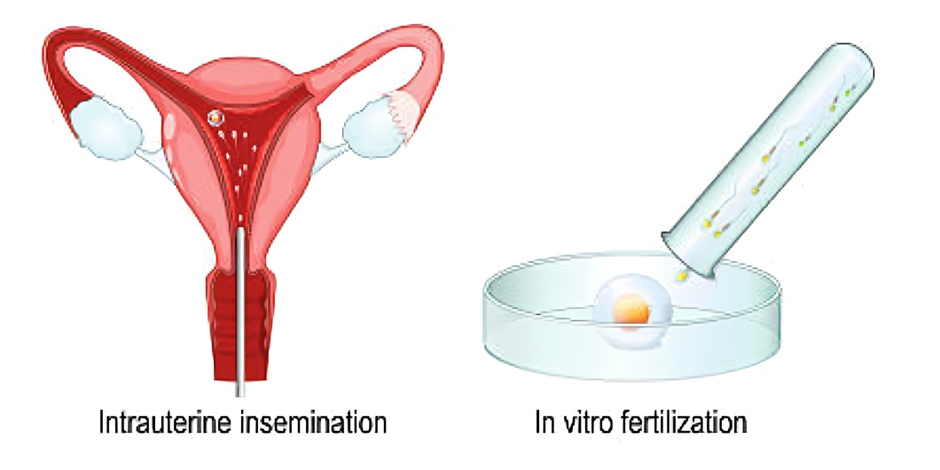
Intrauterine Insemination (IUI) is a first-line comprehensive infertility treatment where laboratory-prepared, concentrated motile sperm is placed directly into a woman's uterus around the exact time of ovulation.
The goal is to bypass the cervix and bring a high concentration of healthy sperm closer to the fallopian tubes, where natural fertilization occurs. Unlike In Vitro Fertilization (IVF), IUI does not involve extracting eggs from the body or creating embryos in a laboratory.
Before starting an IUI cycle, Dr. Usha Karki must evaluate whether the treatment is clinically appropriate for you. These baseline investigations are typically billed separately from the active insemination cycle.
Your initial consultation determines if IUI is a reasonable option or if another pathway should be considered. We review your menstrual regularity, past pregnancies, and overall reproductive health.
A comprehensive semen analysis is mandatory before IUI. The laboratory evaluates sperm concentration, morphology, and motility. IUI requires an adequate number of usable, forward-moving sperm after laboratory washing to be effective. If parameters are severely low, we may provide guidance on how to improve sperm quality or suggest alternative treatments.
Because fertilization during IUI happens naturally inside the body, the patient must have at least one open, functional fallopian tube. If both tubes are blocked, IUI will not work, and IVF will be recommended instead.
Baseline blood tests evaluate your thyroid, prolactin, and ovarian reserve (AMH), while a pelvic ultrasound checks the health of your uterus and ovaries.
When reviewing an IUI estimate, the following components may affect your total bill. Always confirm which of these are included in your clinic's package:
| Treatment Component | Why It Is Needed | What to Confirm With the Clinic |
| Follicular Monitoring | Ultrasound scans track egg growth to time the procedure perfectly. | How many scans are included in the package? |
| Fertility Medication | Oral pills or injections stimulate the ovaries to produce 1 to 3 mature eggs. | Are prescribed medicines included or billed at the pharmacy? |
| Trigger Injection (hCG) | Induces final egg maturation and triggers exact ovulation. | Is the trigger shot medication and administration included? |
| Sperm Preparation | The lab washes the semen to concentrate motile sperm and remove seminal fluid. | Is laboratory processing part of the main fee? |
| Insemination Procedure | The physical placement of sperm into the uterus using a soft catheter. | Does this cover the doctor’s fee and disposable medical supplies? |
| Luteal Phase Support | Progesterone medication to help the uterine lining support a pregnancy. | Is follow-up medication included in the quote? |
A natural IUI cycle is timed with a woman’s natural ovulation without using fertility drugs. This is generally less expensive but relies on highly predictable natural cycles.
A stimulated IUI cycle uses medications to encourage the development of mature follicles, followed by closer ultrasound monitoring and a trigger injection. While it costs slightly more due to medications and scans, it allows for highly precise timing and can increase the chances of success for many patients.
Some patients respond quickly to medication and only need two scans. Others may require four or five scans to safely monitor follicle growth and prevent the risk of a multiple pregnancy (twins or triplets). If scans are billed separately, this will change your final cost.
IUI does not guarantee a pregnancy on the first attempt. Clinical guidelines often recommend trying 3 to 4 cycles of IUI before moving on to more advanced treatments. If a cycle is repeated, costs for medication, monitoring, and the procedure will recur.
Baseline Scan: On Day 2 or 3 of your period, an ultrasound confirms your ovaries are ready to begin medication.
Medication & Monitoring: You take oral medications (like Letrozole) for about 5 days. You return to the clinic for ultrasound monitoring to measure the growing follicles.
The Trigger Shot: Once the follicle reaches an optimal size (usually 18–22mm), a trigger injection is administered to induce ovulation.
Sperm Preparation: On the day of the procedure, the male partner provides a semen sample. Our laboratory carefully washes and processes it, which takes about 1 to 2 hours.
The Insemination: A thin, flexible catheter is used to pass the concentrated sperm through the cervix into the uterus. The procedure takes less than 10 minutes and is virtually painless.
The Two-Week Wait: You wait 14 days before taking a blood pregnancy test to confirm the result.
Yes, IUI is significantly less expensive per cycle than IVF. This is because IUI is a lower-intervention treatment; it does not require surgical egg retrieval, anesthesia, or complex embryology laboratory work (like ICSI and prolonged embryo culture).
However, comparing only the price of one cycle can be misleading. A treatment that costs less initially is not the best financial decision if it has a low clinical probability of working for you. For a patient with blocked fallopian tubes or severe male-factor infertility, IUI will not work. In those cases, moving directly to the IVF process in Nepal is a more cost-effective use of time and resources.
To protect yourself from unexpected bills, ask any fertility clinic in Kathmandu these four questions:
Does this quotation include the cost of ovulation induction medications and the trigger injection?
How many follicular tracking ultrasounds are covered in this price?
Is the laboratory sperm washing fee separate from the insemination procedure fee?
What tests are required before we can begin the active cycle, and how much do they cost?
How much does an IUI treatment cycle cost in Nepal?
The total cost depends on the clinic, the type of cycle (natural vs. stimulated), medications, and laboratory fees. At leading centers in Kathmandu, an inclusive IUI cycle generally ranges between NPR 15,000 and NPR 30,000, excluding preliminary diagnostic tests. Always request a personalized, written quotation for accurate budgeting.
Does an IUI package usually include fertility medicines?
Not always. Some clinics bundle basic oral medications into their package, while others charge separately for all pharmacy items, including the trigger injection and luteal phase support. Always clarify exactly which medications are included in your estimate.
Are semen analysis and HSG tests included in the IUI price?
No, a semen analysis and a fallopian tube assessment (HSG) are generally considered pre-treatment diagnostic investigations. They are usually billed separately during your initial fertility workup before the active IUI cycle begins.
Is the IUI procedure painful?
IUI is a very straightforward, minimally invasive procedure. Most patients compare it to the sensation of a routine Pap smear. You may experience mild cramping when the catheter is passed through the cervix, but it usually lasts only a few moments. No anesthesia is required.
News and Articles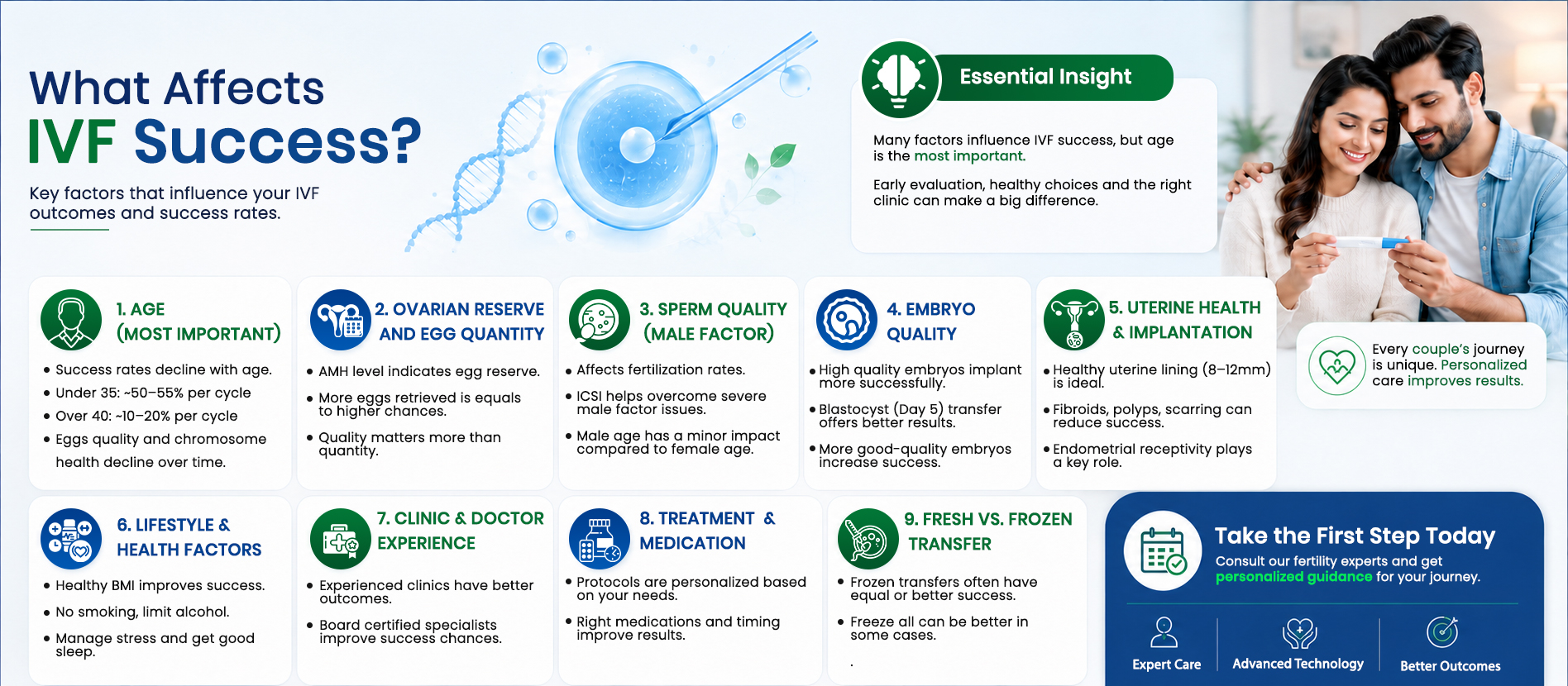
Introduction IVF success rates vary dramatically between patients and clinics. Understanding what affects your pe...
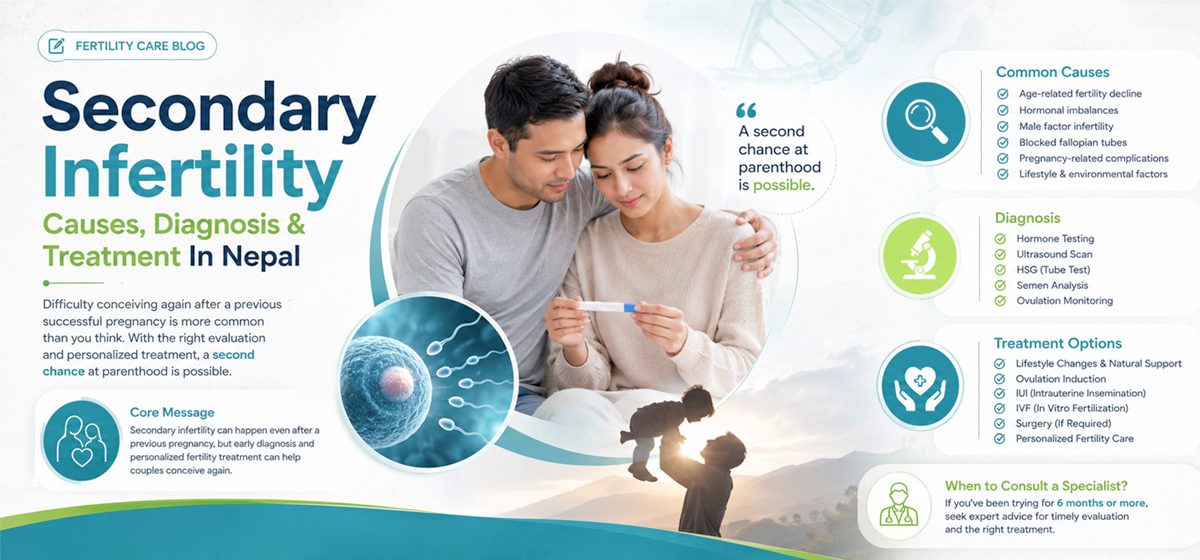
Secondary Infertility: Causes, Diagnosis, Treatment in Nepal Key Takeaways Secondary infertility means difficulty...
IVF Process in Nepal: What Actually Happens at Every Step by Dr. Usha Karki, Obstetrician and Gynecologist / Fertilit...

