IVF vs IUI: Success Rates, Key Differences, and Which Fertility Treatment is Right for You
52 minutes ago, 11 minutes read
Choosing between IVF vs IUI can feel overwhelming, especially when every month of trying to conceive carries emotional, physical, and financial weight. If you are exploring fertility treatments in Kathmandu, understanding the medical distinction between these two pathways is the first step toward building your family.
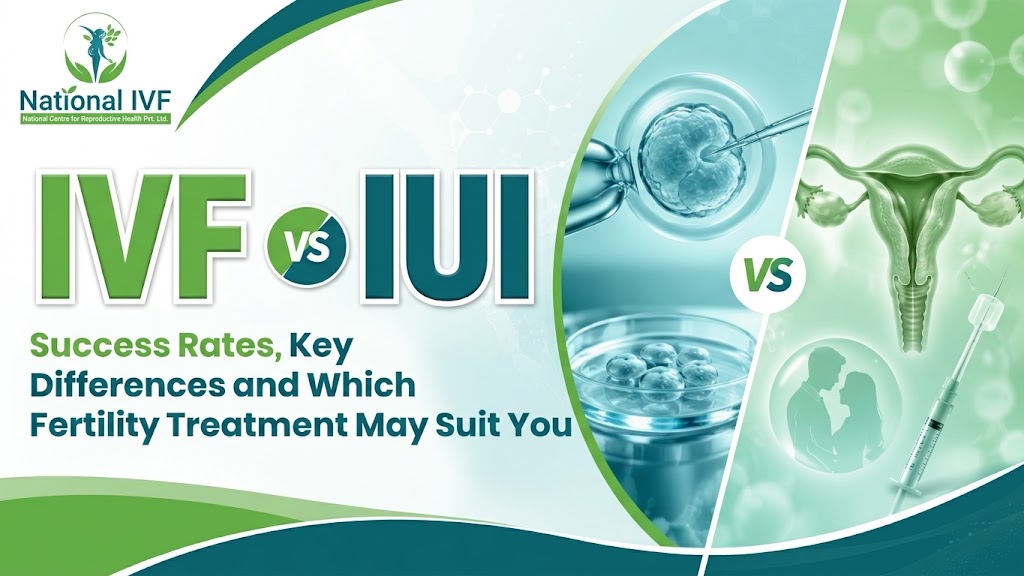
The main difference is straightforward: IUI places prepared, concentrated sperm directly inside the uterus around the time of ovulation, whereas IVF involves retrieving eggs, fertilizing them with sperm in an advanced laboratory, and transferring a resulting embryo into the uterus.
Generally speaking, IVF is more effective per treatment cycle because the critical stages of fertilization and early embryo development occur in a controlled laboratory environment. However, IUI is simpler, less invasive, and may be highly appropriate when the fallopian tubes are open and sperm-related concerns are mild.
At National IVF, widely recognized as the best IVF center in Nepal, Clinical Director Dr. Usha Karki believes that the right option depends on your age, specific diagnosis, ovarian reserve, and tubal health not just a generic comparison chart.
This guide explains the key differences, success rates, physical demands, and how to make an informed, confident decision about your fertility care.
Both treatments aim to improve the chances of pregnancy, but they intervene at completely different stages of the reproductive process.
Intrauterine Insemination (IUI) is a relatively simple, office-based procedure.
Around the time of ovulation, the male partner provides a semen sample. Our laboratory washes and processes the sample to concentrate the highly motile (moving) sperm and remove seminal fluid. Using a very thin, flexible catheter, the specialist places this prepared sperm directly into the uterus.
Crucially, fertilization still needs to happen naturally inside the woman's body. This means IUI requires at least one open, functioning fallopian tube, an egg that successfully ovulates, and sperm capable of reaching and penetrating the egg. You can learn more about the steps and budgeting in our guide to intrauterine insemination (IUI) cost.
In Vitro Fertilization (IVF) is a more advanced, multi-step Assisted Reproductive Technology (ART).
It involves using hormonal medications to stimulate the ovaries to produce multiple mature eggs. These eggs are then gently retrieved under light sedation. In our state-of-the-art embryology laboratory, the eggs are combined with sperm (or injected directly via ICSI) to facilitate fertilization. The resulting embryos are cultured for 3 to 5 days, and the healthiest embryo is carefully transferred into the uterus.
Because fertilization happens in the lab, IVF bypasses the fallopian tubes entirely. It is highly effective for blocked tubes, severe male-factor infertility, or when time is critical due to advanced reproductive age. For a complete breakdown, read our step-by-step guide to the IVF process in Nepal.
| Factor | IUI (Intrauterine Insemination) | IVF (In Vitro Fertilization) | Why It Matters for You |
| Where Fertilization Happens | Inside the body (fallopian tube). | In an embryology laboratory. | IVF provides concrete information about embryo development before transfer. |
| Main Procedure | Prepared sperm is placed in the uterus. | Eggs are collected, fertilized in a lab, and embryos are transferred. | IVF requires more clinical monitoring, medications, and laboratory resources. |
| Need for Open Fallopian Tubes | Yes. At least one tube must be open and functional. | No. Fallopian tubes are bypassed entirely. | IVF is the primary solution for tubal-factor infertility. |
| Male-Factor Infertility | Suitable for mild issues with an adequate post-wash motile sperm count. | Highly effective for severe sperm concerns, utilizing ICSI. | An accurate semen analysis dictates which treatment will work. |
| Physical Burden | Generally low. | Higher due to daily hormone injections and the egg retrieval procedure. | Treatment comfort and recovery times differ. |
| Per-Cycle Success Rate | Usually lower; heavily dependent on age and diagnosis. | Usually much higher per cycle, though never 100% guaranteed. | Success expectations should be guided by your specific medical profile. |
Neither treatment is universally "better." The best option is the one that directly addresses your specific barrier to pregnancy without causing unnecessary delays, emotional burnout, or financial strain.
IUI is often the better choice when:
The female partner is younger (typically under 35).
At least one fallopian tube is open and healthy.
Semen analysis results are normal or only mildly impaired.
The couple has unexplained infertility and wants to try a less invasive option first.
IVF is often the better choice when:
Both fallopian tubes are blocked or damaged.
Sperm quality is significantly impaired (requiring ICSI).
Several well-timed, monitored IUI cycles have failed.
The female partner has a low ovarian reserve or advanced reproductive age, making time of the essence.
There is severe endometriosis.
When comparing success rates, it is vital to understand that statistics depend heavily on the female partner's age and the underlying cause of infertility.
For IUI, the success rate per cycle is generally between 10% to 20% for women under 35. However, success rates drop significantly—often to less than 5% per cycle—for women over the age of 40. Because a single IUI attempt has a limited statistical chance, specialists often recommend a planned course of 3 to 4 cycles before reassessing the strategy.
For IVF, the success rates are substantially higher per cycle because the fertilization barrier has been overcome in the lab, and only viable embryos are transferred. While outcomes vary by age and embryo quality, IVF offers the highest clinical pregnancy rates of any fertility treatment available today.
During your consultation at National IVF, Dr. Usha Karki will provide honest, individualized context rather than generic numbers, aligning with our transparent data on IVF success rates in Nepal.
For the vast majority of patients, IUI is physically less demanding and less painful than IVF.
The IUI procedure takes only a few minutes and feels very similar to a routine Pap smear or pelvic exam. Some women experience mild, period-like cramping as the catheter passes through the cervix, but no anesthesia is required, and you can resume normal activities immediately.
IVF involves a higher physical burden.
The ovarian stimulation phase requires daily hormonal injections for about 10 to 12 days, which can cause temporary bloating, mood changes, and pelvic heaviness. The egg retrieval is a minor surgical procedure, but it is performed under light intravenous sedation, meaning you will be asleep and feel no pain during the collection. The final embryo transfer is very similar in sensation to an IUI.
There is a common misconception that fertility treatments always result in twins or triplets. While multiple pregnancies can occur, modern fertility care actively works to prevent them, as singleton pregnancies are significantly safer for both the mother and the baby.
With IUI: The risk of twins is linked to the ovulation-inducing medications. If medication causes three or four mature follicles to develop, and sperm is introduced, multiple eggs could fertilize naturally inside the body. Close ultrasound monitoring is required to prevent this.
With IVF: The risk of twins is entirely controlled by the number of embryos the doctor chooses to transfer into the uterus. By utilizing Single Embryo Transfer (SET) transferring just one highly graded blastocyst—the risk of twins drops dramatically while maintaining excellent pregnancy rates.
Couples considering fertility treatment in Kathmandu should expect a structured, evidence-based assessment before any treatment is recommended.
At National IVF, located in Kantipath, Kathmandu, we do not believe in a one-size-fits-all approach. Under the expert clinical leadership of Dr. Usha Karki (Consultant in Reproductive Medicine), we conduct thorough evaluations of both partners including ovarian reserve testing, semen analysis, and tubal patency checks (HSG) before drawing a conclusion.
A reliable clinic will explain when IUI is a perfectly reasonable starting point, and they will be equally honest when IVF is the necessary path forward to prevent wasting your time and resources.
If you are struggling to decide between IVF vs IUI, ask these five questions during your next consultation:
What is our specific fertility barrier? (Is it an ovulation issue, a tubal issue, or a sperm issue?)
Are my fallopian tubes definitively open? (If not, IUI will not work).
What is the post-wash motile sperm count? (Does the semen sample have enough strong swimmers for IUI?)
Is time a major concern based on my age and AMH levels?
If we start with IUI, how many cycles will we try before moving to IVF?
Which one is better, IUI or IVF?
IVF is statistically more effective per treatment attempt because fertilization is confirmed in the laboratory. However, IUI is a highly sensible, less invasive, and more affordable first option for younger couples with open fallopian tubes and mild or unexplained infertility.
Is IUI 100% successful?
No medical procedure is 100% successful. The chance of pregnancy with IUI depends heavily on age, diagnosis, sperm quality, and tubal health. Even under perfect conditions, pregnancy cannot be guaranteed in a single IUI cycle.
Why would IUI fail?
IUI relies on the body's natural processes after the sperm is placed in the uterus. It may fail if the egg is not of sufficient quality, if the fallopian tubes have microscopic damage preventing the egg from traveling, if the sperm fails to penetrate the egg naturally, or if the resulting embryo fails to implant in the uterine lining.
What is the best age for IUI?
IUI tends to yield the best results for women under the age of 35, when egg quality and quantity are generally favorable. After age 35, and particularly after age 40, success rates with IUI drop significantly, and specialists will often recommend moving to IVF sooner.
About the Medical Expert: Dr. Usha Karki Dr. Usha Karki is a Consultant in Reproductive Medicine, Fertility Specialist, and the Clinical Director at National IVF (National Centre for Reproductive Health Pvt. Ltd.) in Kathmandu, Nepal. Holding an MBBS, MD in Obstetrics and Gynecology, and a Fellowship in Reproductive Medicine from Gunasheela Hospital, India, Dr. Karki is celebrated for her ethical, evidence-based approach to fertility care. She specializes in guiding couples through complex treatment decisions, offering advanced care in IUI, IVF, ICSI, and PCOS management. Learn more about Dr. Usha Karki.
News and Articles
Polycystic Ovary Syndrome (PCOS) has become one of the most significant reproductive and hormonal challenges among Nepal...
Infertility is a deeply personal and often overwhelming challenge, affecting thousands of families across Nepal. As the...

When it comes to reproductive health and fertility care, choosing the right expert is the most crucial decision a couple...

